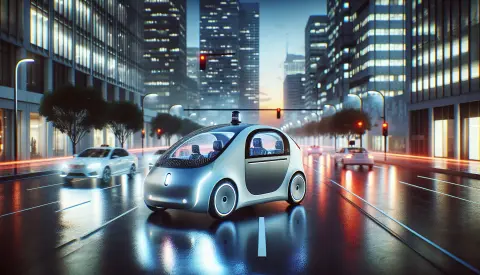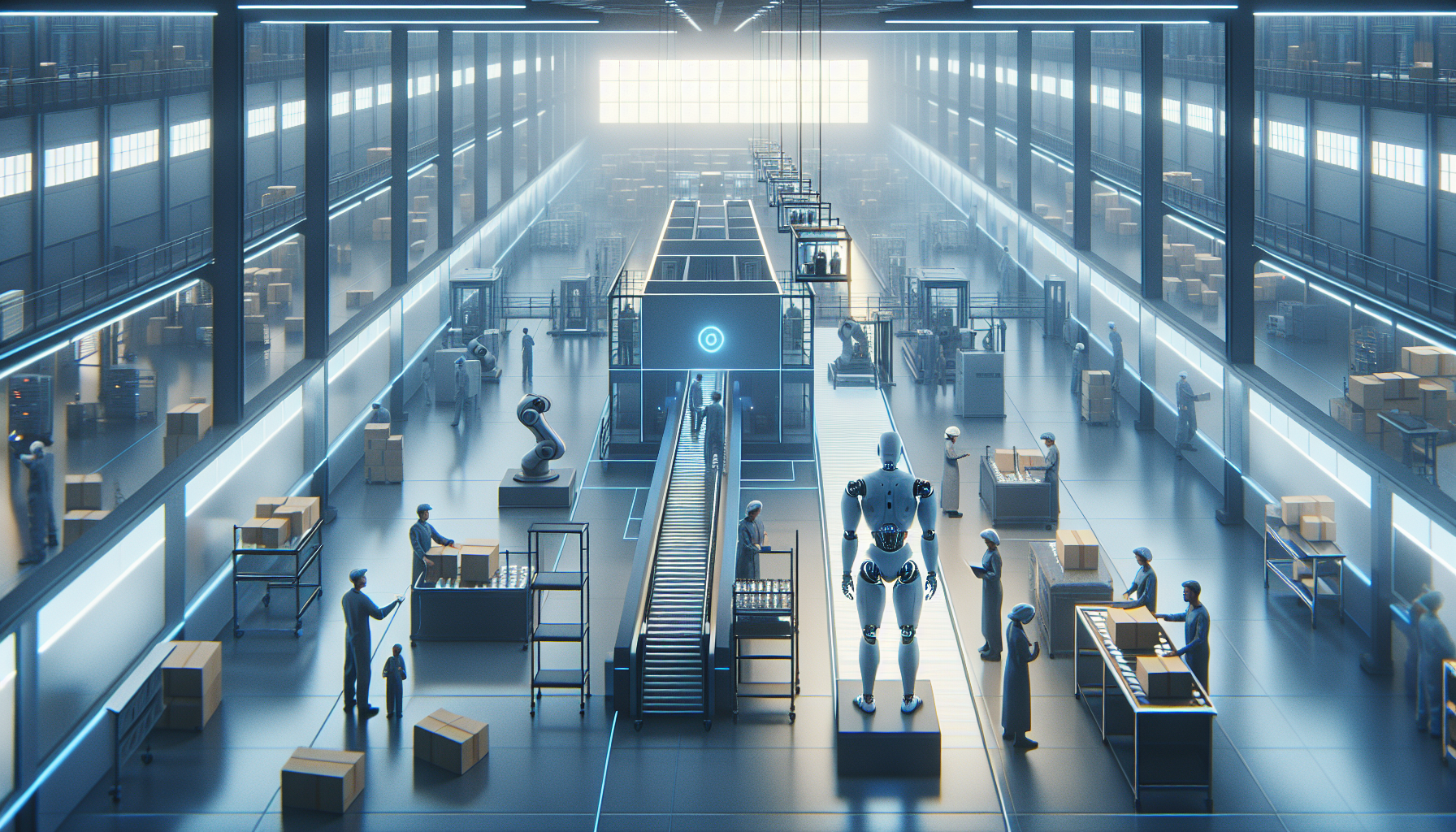
For five years, enterprise AI has lived inside text boxes — summarizing documents, drafting emails, answering support tickets. Forrester’s just-released Top 10 Emerging Technologies for 2026 report signals that phase is ending. The research firm’s analysts argue that AI has crossed into the physical world, and the organizations that fail to recognize the shift will spend the next decade catching up.
From Chat to Physical Presence
The headline finding is blunt: AI is no longer confined to digital workflows. Released on April 15, Forrester’s report identifies physical AI — systems embedded in machines that can perceive, reason, and act in real environments — as one of the defining technology bets of the next five years.
Unlike traditional automation, physical AI systems don’t follow scripts. They adapt. Early warehouse and hospital deployments are already reporting 20–50% efficiency improvements over comparable rule-based setups, according to Forrester’s data. The firm’s analysts are careful to temper expectations, however: broad enterprise value from humanoid robots and fully autonomous physical agents remains two to four years out, blocked by integration complexity, safety certification timelines, and workforce transition challenges.
The short-term picks on the list are more immediately actionable. Forrester flags agentic commerce — AI systems that transact on behalf of users without human confirmation — as a near-term priority, alongside AI security tooling designed to counter the rapidly escalating threat of AI-generated attacks. Both are categorized as capable of delivering measurable ROI within 12 to 18 months.
The Broader Shift: AI as a Business Reinvention Engine
The report does more than rank technologies. It frames the strategic question enterprises need to answer: are they using AI to do existing jobs cheaper, or to reshape what they do?
Forrester’s position is that the companies extracting real financial value from AI are the ones treating it as a reinvention tool — not a productivity layer bolted on top of existing processes. This aligns with PwC’s concurrent 2026 AI Performance Study, which found that roughly 20% of companies are capturing three-quarters of AI’s economic gains, precisely because they are using the technology to expand beyond traditional business model boundaries rather than just automating within them.
The medium-term bets in the Forrester list — ambient AI interfaces, biologically-inspired AI architecture, and AI-driven supply chain orchestration — all share the same logic: AI stops being a tool you open and starts being an environment you operate in.
What Enterprises Should Do Now
Forrester’s framework prioritizes technologies by benefit horizon: short-term (under 18 months), medium-term (18–36 months), and long-term (3+ years). For most enterprises, the practical implication is a three-layer roadmap.
The immediate layer should focus on agentic AI deployed inside existing enterprise software stacks — customer service, procurement, and internal knowledge management are the highest-ROI entry points. The mid-layer involves investing in physical AI pilots in controlled environments: logistics, quality control, or field service. The long-horizon bet is humanoid robotics and fully autonomous physical agents — real, but not ready to deploy at scale.
The competitive gap is widening fast. Early deployments have a 12–18 month head start on the integrations that will determine which platforms win at each layer. For most enterprises, the decision to wait is no longer neutral.
Forrester’s full Top 10 Emerging Technologies for 2026 report is available at forrester.com. Additional data sourced from PwC’s 2026 AI Performance Study.