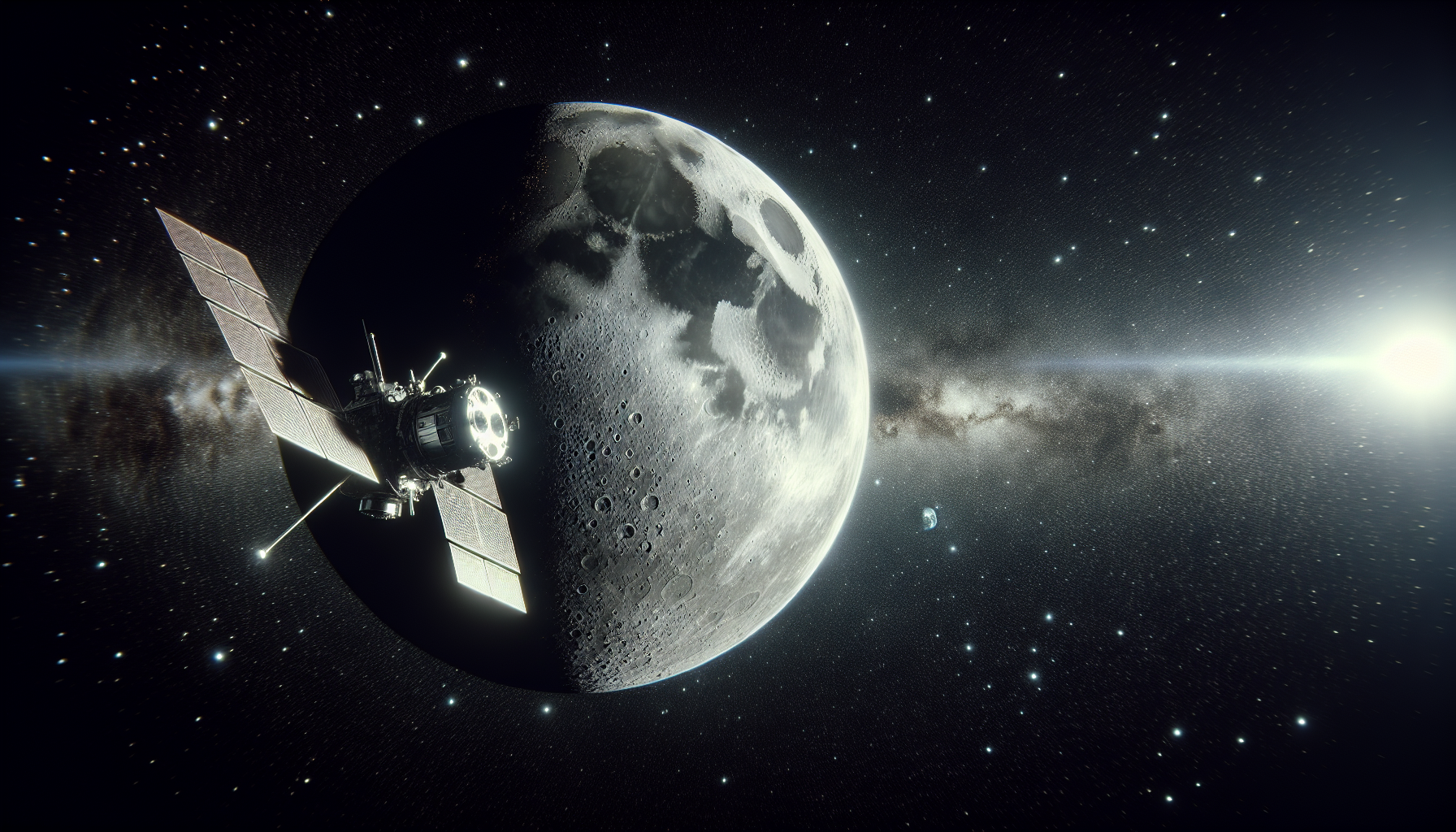
On April 1, 2026, four astronauts boarded the Orion spacecraft atop NASA’s Space Launch System rocket at Kennedy Space Center and began the first crewed journey to the vicinity of the Moon since Apollo 17 in December 1972. Ten days later, the Artemis II mission splashed down, completing a historic test flight that broke a distance record, produced the first crewed imagery of the lunar far side, and validated the hardware stack designed to eventually return humans to the Moon’s surface.
The crew — NASA astronauts Reid Wiseman, Victor Glover, and Christina Koch, joined by Canadian Space Agency astronaut Jeremy Hansen — became the first humans in more than half a century to travel beyond low Earth orbit. The mission’s objectives were primarily engineering verification: proving that Orion and SLS could perform a crewed translunar trajectory and return safely. Both systems performed within parameters.
Farther Than Any Crew in 56 Years
On April 6, day six of the mission, Orion executed its closest lunar approach, swinging around the Moon in a free-return trajectory that used lunar gravity to slingshot the spacecraft back toward Earth without requiring a dedicated propulsion burn. During the flyby, the crew reached a maximum distance of 252,760 miles from Earth — surpassing the record set by the Apollo 13 crew in April 1970, when that mission’s emergency abort trajectory took the crew to a then-record 248,655 miles.
The flyby lasted several hours. During that window, the astronauts photographed and made direct visual observations of regions of the lunar far side that no human eye had ever seen from a crewed spacecraft. NASA released the first images on April 7, showing stark, heavily cratered terrain and the curvature of the Moon against the blackness of deep space.
An Eclipse No One Had Planned For
Among the mission’s unscripted highlights was a 57-minute solar eclipse observed from Orion as the spacecraft passed into the Moon’s shadow. The crew donned eclipse glasses as sunlight was gradually obscured, then removed them once the Sun was fully blocked — observing the solar corona directly, along with what mission scientists described as “impact flashes” from meteoroids striking the dark portion of the lunar surface. The combination of eclipse and far-side observation produced scientific data that will take months to fully analyze.
The communications blackout period during the lunar flyby — standard for any spacecraft passing behind the Moon — lasted as expected. Controllers at Johnson Space Center confirmed nominal vehicle status when Orion re-emerged from behind the Moon and reestablished contact.
What Comes Next
Artemis II was a test, not a landing. The mission’s formal objective was to demonstrate the full integrated performance of SLS, Orion, and ground systems with a crew aboard — a qualification step that Artemis I, the uncrewed 2022 test flight, could not fully complete. With that box now checked, NASA and its international partners can move forward on Artemis III, which is designed to land the first woman and the first person of color on the lunar surface near the south pole, where water ice deposits have been confirmed.
The south pole focus is not purely symbolic. Accessible water ice represents a potential in-situ resource for future lunar bases — both for life support and for electrolysis into hydrogen and oxygen, the propellant combination used by Orion’s service module engine. Artemis III will carry the SpaceX Human Landing System, the modified Starship variant contracted to bring the crew from lunar orbit to the surface and back.
The Artemis II mission’s technical success does not guarantee a smooth path ahead. Funding, schedule, and the political durability of the program across administrations remain variables. But for ten days in April 2026, four humans flew farther from Earth than any of their predecessors in more than half a century — and came back with pictures to prove it.