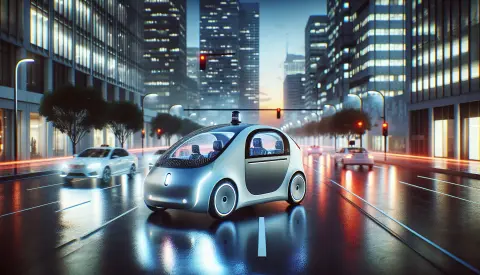
The autonomous vehicle and robotics sector has recorded one of the most dramatic investment surges in tech history. According to Crunchbase data through April 15, 2026, AV startups globally raised $21.4 billion across 34 deals — a 262% increase compared to the $5.9 billion raised across 99 deals in all of 2025. The compression is stark: four months has already outpaced a full prior year by a factor of three.
Waymo Sets the Anchor
The dominant deal is Waymo’s $16 billion financing round closed in February 2026 at a $126 billion valuation — the largest single funding event in autonomous vehicle history. The round was co-led by Alphabet, Dragoneer Investment Group, DST Global, and Sequoia Capital, and was designed to fund Waymo’s aggressive commercial expansion across U.S. cities and its nascent international program.
Waymo now operates fully driverless robotaxi services in San Francisco, Los Angeles, Phoenix, and Austin, with Miami onboarding through Q2. The company completed over 4 million paid rides in Q1 2026, a number that was not achievable for any AV operator as recently as 2024.
Humanoid Robotics Joins the Capital Race
Beyond wheeled autonomy, the humanoid robotics segment has attracted serious capital. Figure AI closed its Series D at a $48 billion valuation, with Amazon deploying 20,000 units across its fulfillment centers in a live production contract. Current production stands at 1,200 units per month, with a target of 5,000 per month by Q4 2026.
Mobileye — the Intel spinout and leader in automotive vision systems — announced a $900 million acquisition of Mentee Robotics, combining its autonomous driving AI with Mentee’s humanoid bipedal platform. The deal is a bet on “physical AI” convergence: the same perception and decision-making stack that navigates a car can, with modifications, operate a humanoid body in a warehouse or construction site.
Mind Robotics, an industrial robotics lab that spun out of Rivian in late 2025, raised $500 million in Series A funding co-led by Accel and Andreessen Horowitz. The company is targeting automotive and logistics environments, leveraging Rivian’s proprietary sensor fusion expertise.
Why Now
Several structural forces have converged to drive this investment wave. First, the regulatory environment has shifted materially: NHTSA issued updated autonomous vehicle deployment guidelines in January 2026, and five additional U.S. states passed AV commercial operation bills in Q1. Second, large-scale AI model advances — particularly in multimodal spatial reasoning — have dramatically reduced the time required to handle edge cases that previously stalled deployments. Third, labor costs in logistics and manufacturing continue to rise, making automation economics increasingly favorable.
Wayve, a UK-based AV startup focused on autonomous delivery and logistics, closed a $1.3 billion Series D co-led by Balderton Capital, Eclipse, and SoftBank Vision Fund at an $8.6 billion valuation, signaling that European autonomy is gaining serious institutional backing alongside the U.S.
The Road Ahead
The burst of capital is not without risk. Unit economics at scale remain unproven for most players outside Waymo. Regulatory harmonization across jurisdictions is incomplete. And the sector’s growing dependence on a handful of AI chip suppliers — primarily Nvidia — creates supply chain concentration risk that several investors have flagged in public filings.
Still, the direction is unambiguous. Physical AI — autonomous vehicles, humanoid robots, and intelligent logistics systems — is transitioning from R&D showcase to commercial infrastructure. The capital markets have noticed, and are moving accordingly.