When Hyundai Motor Group acquired Boston Dynamics in June 2021 for $1.1 billion, many observers viewed it as a prestige purchase — a trophy asset for a carmaker eager to signal ambitions beyond the internal combustion engine. Four years later, Korean securities firms are placing Boston Dynamics’ enterprise value at up to $200 billion, a 180-fold increase that reflects one of the most dramatic corporate revaluations in recent memory.
The catalyst is Atlas. The fully electric, enterprise-grade version of Boston Dynamics’ iconic humanoid robot — unveiled at CES 2026 and awarded CNET’s Best of Show — has crossed a threshold that the robotics industry has been approaching for years: production units are now shipping to paying customers.
From Research Platform to Factory Floor
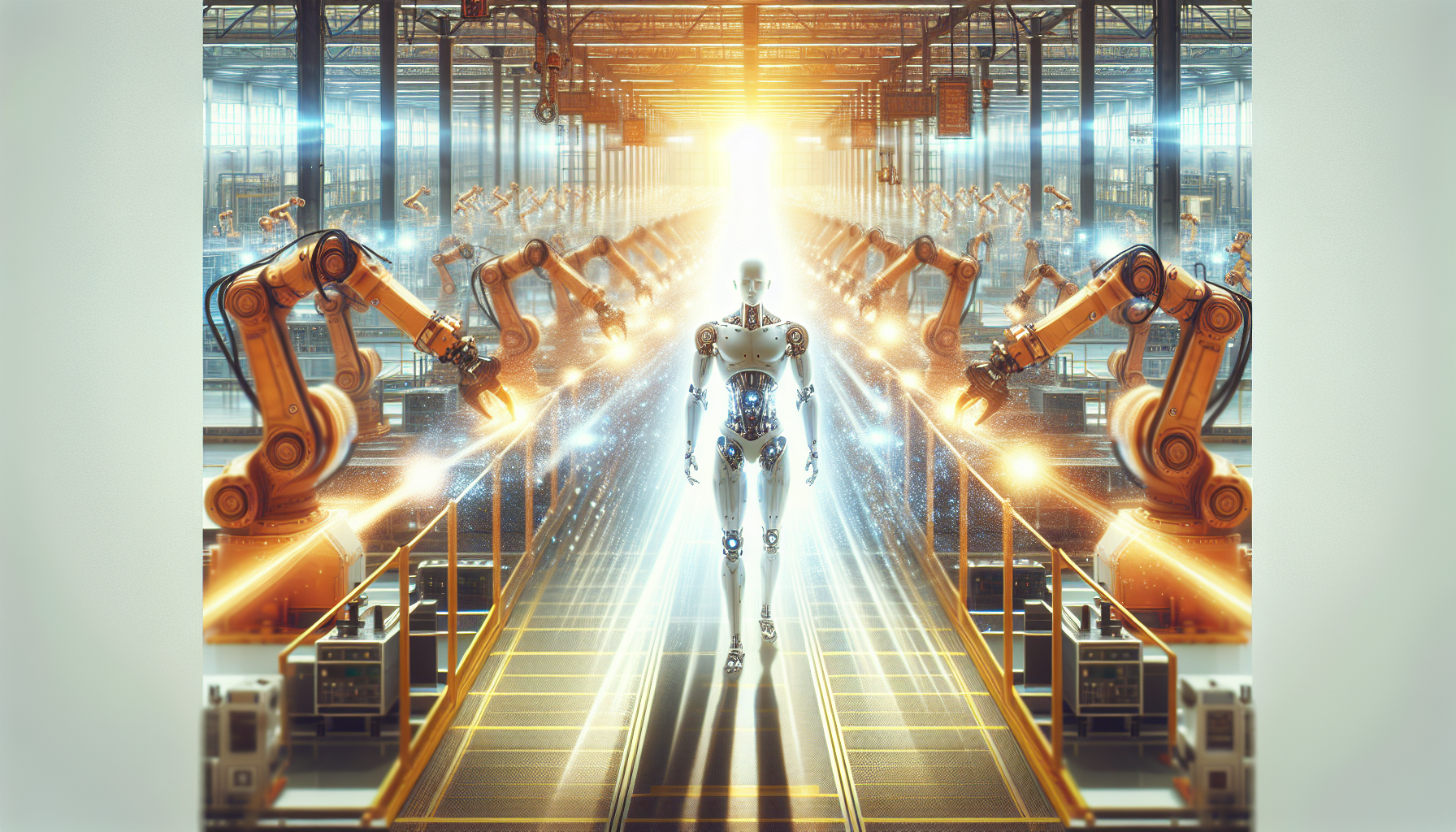
The electric Atlas is a fundamental redesign of the hydraulic prototype that spent nearly a decade doing backflips on the internet. Where the original was a proof of concept, the 2026 production unit is built to perform repeatable industrial tasks — material handling, logistics, assembly support — reliably enough to be deployed in real manufacturing environments.
All 2026 Atlas units are already committed. Hyundai’s Robotics Metaplant Application Center (RMAC) will receive the first batch, with broader Hyundai facility deployments targeting 2028 at a scale of 30,000 units per year. Google DeepMind has secured an allocation as well, almost certainly for research into embodied AI — training large models that can understand and act in physical environments.
The partnership with Google DeepMind is particularly significant. It connects Boston Dynamics to one of the world’s most advanced AI research organizations, and creates a pathway for Hivemind-level AI integration into physical robotic systems — not just simulations.
The Valuation Surge
The numbers are striking. Korean securities firms with visibility into Hyundai’s robotics strategy have placed Boston Dynamics’ implied value between $21 billion and $28 billion in conservative estimates, with IPO projections from institutions like KB Securities reaching 128 trillion won — roughly $88 to $103 billion at current exchange rates. More aggressive analyst models push the enterprise value toward $200 billion when incorporating the potential of its robotics-as-a-service model at scale.
For context: Hyundai paid $1.1 billion in 2021. The current implied valuation represents a 24-fold surge even at the conservative end, and a near 180-fold surge at the high end.
An IPO has been discussed as possible as early as 2027. Hyundai has not confirmed a timeline, but the pressure is building. Figure AI, a private U.S. competitor, holds a $39 billion valuation. Tesla’s Optimus program is advancing toward volume production. The window for Boston Dynamics to establish a dominant public market position may not stay open indefinitely.
The Race to Own the Humanoid Layer
Boston Dynamics is not operating in isolation. The humanoid robotics sector has absorbed over $10 billion in venture investment since 2024, with capital increasingly concentrated at companies that can demonstrate real-world deployments rather than controlled demos.
Agility Robotics’ Digit units are active at Toyota manufacturing plants in Canada. Apptronik has closed a $935 million Series A. Figure AI has operational units at BMW. The competitive intensity means that Boston Dynamics’ brand recognition and Hyundai’s manufacturing infrastructure are necessary but not sufficient advantages.
What Boston Dynamics has that most rivals lack is a 30-year track record of solving the hard mechanical and control problems of bipedal locomotion — problems that newer entrants are still working through. The electric Atlas is the commercial distillation of that institutional knowledge.
Whether the $200 billion valuation thesis proves correct depends on a question the industry cannot yet answer with confidence: how quickly can humanoid robots achieve the reliability and task diversity required to justify mass production? The 30,000-units-per-year target Hyundai has set for 2028 will be a revealing early test.
For now, the market has decided Boston Dynamics is worth more than almost any company Hyundai has ever owned. The robots just have to deliver.