Shield AI has closed a $2 billion Series G financing package at a $12.7 billion post-money valuation — a 140 percent jump from the $5.3 billion valuation it held just twelve months ago — as the San Diego-based defense technology company positions itself at the center of the U.S. military’s growing reliance on autonomous AI systems.
The round was led by Advent International and co-led by JPMorganChase’s Strategic Investment Group under its Security and Resiliency Initiative. Blackstone contributed an additional $500 million in preferred equity, with a $250 million delayed draw facility extending total potential backing to $750 million. The deal also brings Advent Chairman David Mussafer onto Shield AI’s board.
Hivemind: AI That Flies Without a Pilot
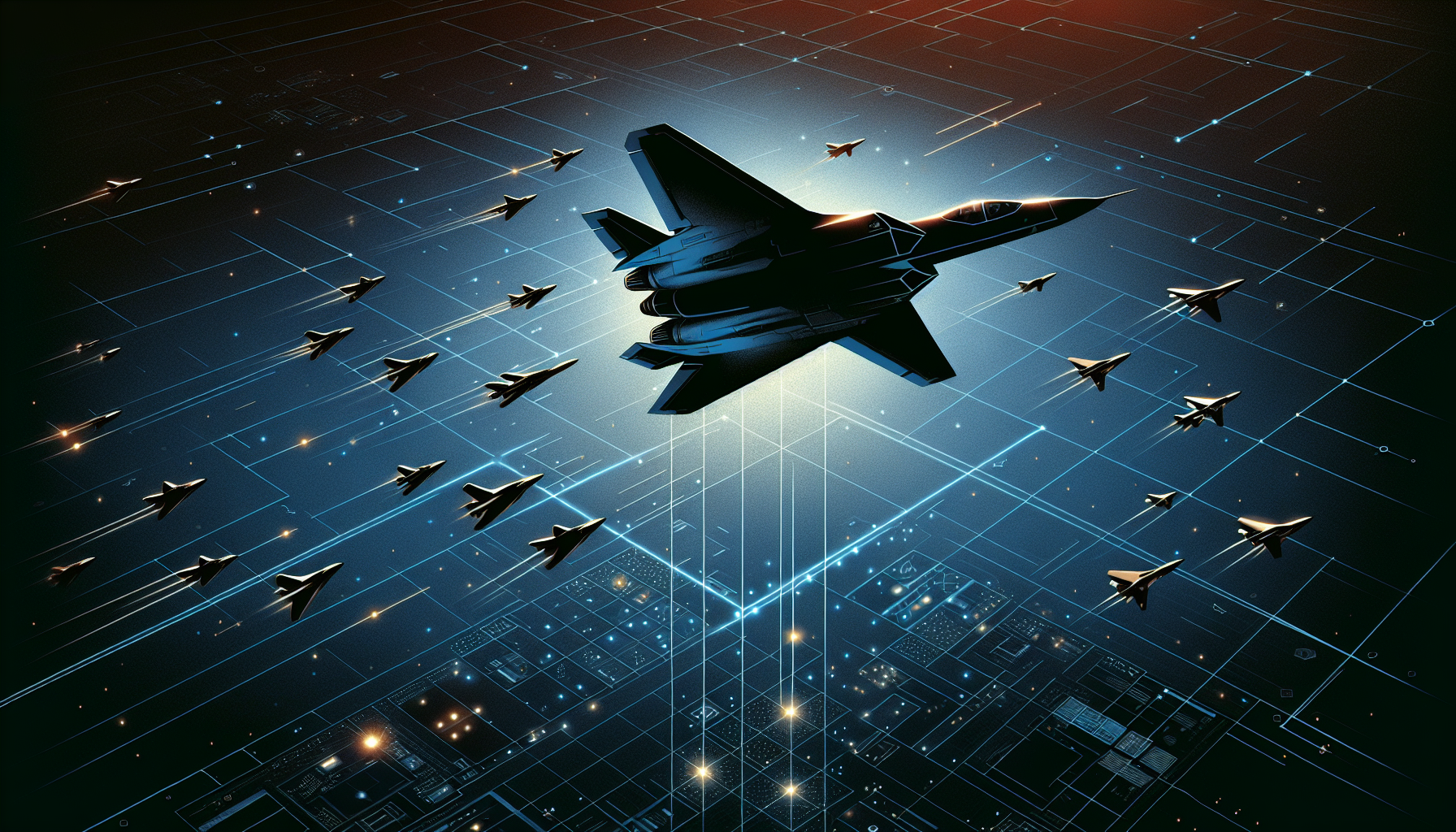
The capital raise is closely tied to Shield AI’s flagship product: Hivemind, an autonomous AI piloting platform designed to fly military aircraft — drones, jets, and multi-domain vehicles — without human operators or GPS infrastructure. The system is built to operate in contested environments where communications are degraded or jammed, conditions that render conventional remotely piloted systems unreliable.
Shield AI claims Hivemind has logged millions of simulated flight hours and has been tested on a range of platforms, including the F-16 in the DARPA AlphaDogfight Trials. The company is now focused on scaling Hivemind to operate coordinated swarms of autonomous vehicles — a capability it calls “AI wingmen,” designed to fly alongside crewed aircraft and take on the most dangerous missions.
The Air Force recently selected Shield AI for a significant autonomous systems program, a contract win that analysts say contributed directly to the valuation re-rating. The company projects more than $540 million in revenue for 2026, reflecting a rapid shift from research contracts to production-level deployments.
The Aechelon Acquisition
Alongside the financing, Shield AI announced the pending acquisition of Aechelon Technology, a tactical simulation software firm whose tools are used to create high-fidelity synthetic environments for military training and autonomous system testing. The deal signals that Shield AI is moving to own more of the AI training pipeline — from simulation to deployment — rather than relying on third-party data and environments.
Aechelon’s simulation platforms are already embedded in U.S. military training programs, giving Shield AI both a strategic capability and a built-in customer base for its autonomous systems. The combined entity would be one of the few defense AI companies capable of training, testing, and deploying autonomous combat systems entirely within its own stack.
Defense AI Heats Up
Shield AI’s raise comes amid a broader surge in defense technology investment. The company competes in an increasingly crowded field that includes Anduril Industries, which is reportedly valued at over $28 billion, and a wave of dual-use AI startups seeking Pentagon contracts.
The geopolitical backdrop is accelerating that investment. Conflicts in Eastern Europe, the South China Sea, and the Middle East have made autonomous weapons systems a near-term operational priority rather than a distant research project. The U.S. Department of Defense has signaled it intends to integrate AI-piloted vehicles into active force structures by the end of the decade.
For Shield AI, the $2 billion raise is as much about credibility as it is about capital. A $12.7 billion valuation and a JPMorgan-backed round send a clear signal to potential government customers: this is a company the financial establishment believes will be operating at scale.
Whether Hivemind can deliver on the promise of fully autonomous combat AI — and whether regulators and military doctrine will keep pace — remains an open question. But the money flowing in suggests Wall Street is betting it will.