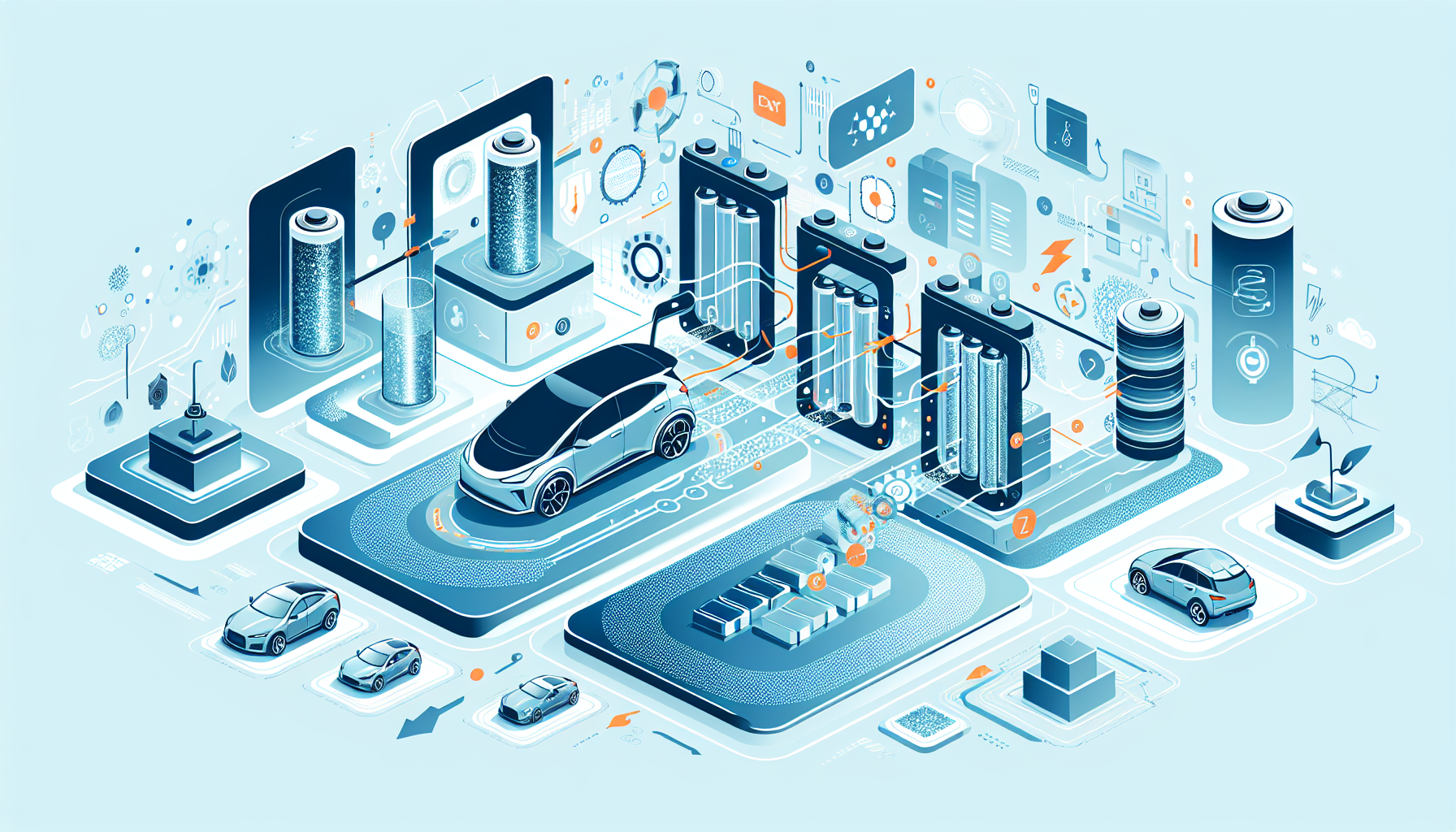
For years, sodium-ion batteries occupied an awkward middle ground in the energy storage world: chemically promising, commercially immature, and perpetually described as “five years away.” In 2026, the calendar has finally caught up with the chemistry. CATL and BYD, the two largest battery manufacturers on earth, have moved sodium-ion from pilot programs into multi-gigawatt production, targeting a technology that could fundamentally alter the economics of electric vehicles — particularly in emerging markets where cost, not performance, determines adoption.
Why Sodium Now
The physics of sodium-ion is not new. Sodium sits directly below lithium on the periodic table, shares similar electrochemical properties, and is roughly 1,000 times more abundant in the earth’s crust. The long-standing problem was energy density: early sodium-ion cells stored significantly less energy per kilogram than lithium counterparts, making them unsuitable for range-competitive EVs.
That gap has narrowed considerably. CATL’s second-generation sodium-ion cells, entering mass production in 2026, achieve 175 Wh/kg — still below the 250–300 Wh/kg of premium lithium-nickel-manganese-cobalt-oxide chemistries, but directly competitive with lithium-iron-phosphate (LFP), the chemistry that currently powers the majority of affordable Chinese EVs. CATL’s cells also operate across an extreme temperature range of -40°C to 70°C, addressing a persistent weakness of lithium in cold-climate markets.
BYD has pursued a parallel track. Its 30-gigawatt-hour Xuzhou facility produces cells with 105–130 Wh/kg energy density, targeting compact EVs priced around $10,000 — a segment that accounts for the majority of first-time EV buyers globally. BYD projects sodium-ion will supply 15–20% of its total battery demand by 2027.
Market Structure and Cost Trajectory
The commercial case for sodium rests on two structural advantages: raw material cost and supply chain resilience. Lithium carbonate prices, which hit record highs above $80,000 per metric ton in 2022, have moderated but remain volatile and geographically concentrated, with significant deposits controlled by a small number of countries. Sodium precursors, by contrast, are available at scale in nearly every industrial economy.
Industry analysts project cost parity between sodium-ion and LFP lithium-ion by 2027. If that timeline holds, it would represent the most significant shift in battery economics since LFP itself displaced nickel-cobalt chemistries in the budget EV segment half a decade ago. The sodium-ion market was valued at approximately $350 million in 2025; forecasts now place it between $5 and $7 billion by 2030, driven almost entirely by Chinese manufacturing volume.
CATL has signaled intentions to deploy sodium-ion across four distinct segments in 2026: passenger EVs, commercial vehicles, battery-swapping networks, and stationary energy storage. The battery-swapping use case is particularly notable — those systems require frequent deep cycling under variable load conditions, precisely the operating profile where sodium-ion’s electrochemical stability and wide temperature tolerance offer advantages over LFP.
Implications Beyond the Car
The sodium-ion push carries consequences that extend well beyond the automotive sector. Grid-scale energy storage is perhaps the most strategically important application. As renewable energy penetration increases, utilities need cheap, abundant, cycle-stable storage that can be deployed at continental scale without bottlenecking on lithium supply. Sodium-ion, if it achieves projected cost targets, could become the default chemistry for new stationary installations by the end of the decade.
There are also supply chain and geopolitical dimensions. The lithium supply chain — from mine to cathode to cell — runs heavily through China, Chile, and Australia. Sodium chemistries do not change who builds the cells, but they do reduce dependence on geographically concentrated raw materials, a consideration that is increasingly relevant to European and North American energy security planning.
The technology has not crossed the finish line. Cell-level performance still trails premium lithium chemistries for long-range or performance applications, and the absence of a deep ecosystem of sodium-compatible equipment, recycling infrastructure, and manufacturing tooling outside China remains a bottleneck. But for the segment where most of the world’s new EV adoption will happen — affordable, sub-$15,000 vehicles in Asia, Latin America, and Southeast Asia — sodium-ion is no longer a laboratory curiosity. It is a production-scale commercial product arriving in showrooms this year.