Bitcoin ETF Inflows Surge to $3.2 Billion in April as Institutional Demand Accelerates
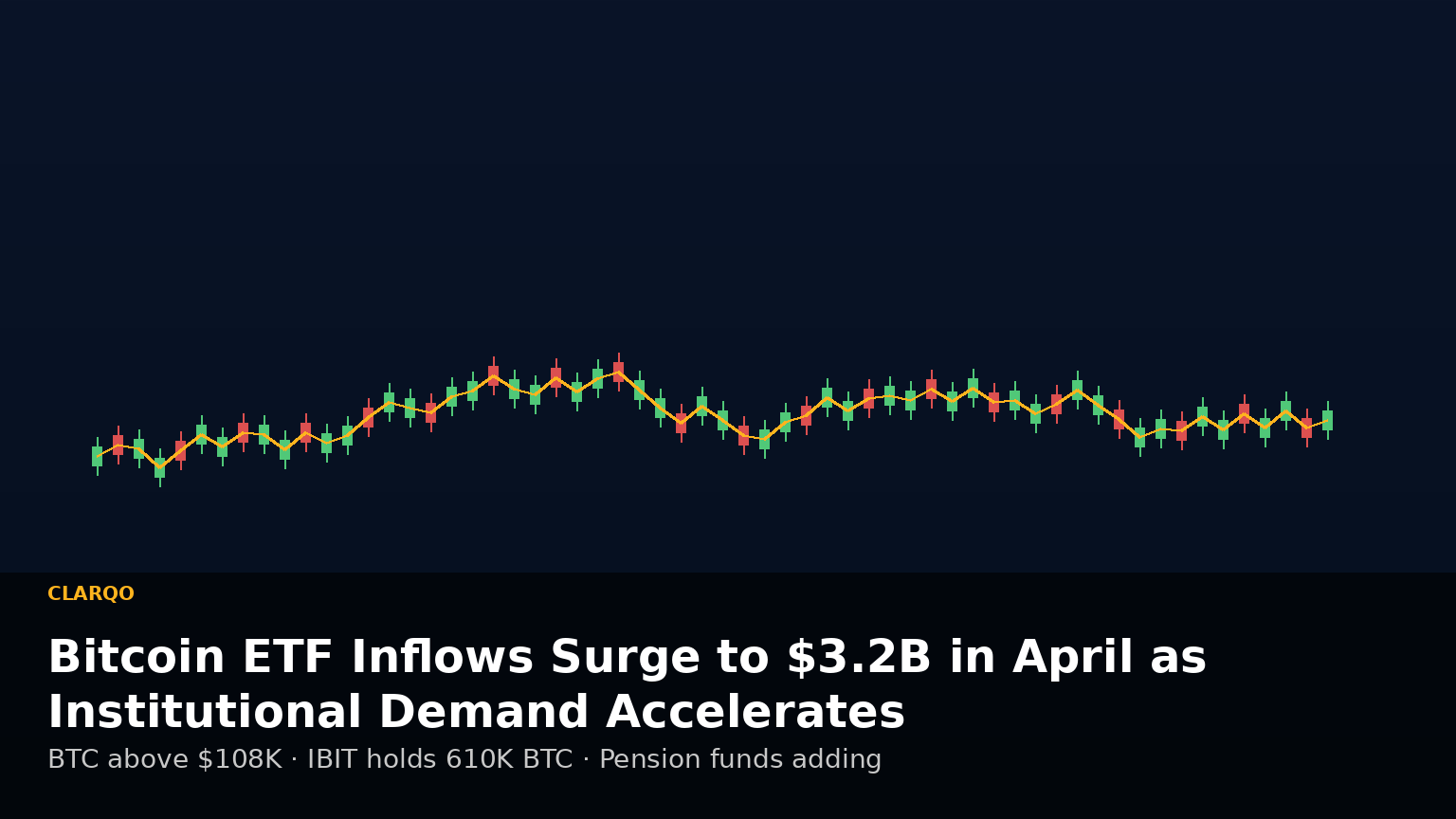
Bitcoin traded above $108,000 on Thursday morning in Asian markets, within 4% of its all-time high set in January 2026, driven by a sustained wave of institutional buying through spot ETF vehicles that has accumulated $3.2 billion in net inflows since April 1 (Bloomberg ETF data, April 23, 2026). The move is notable not just for its size but for its character: this is not retail-driven leverage speculation — it is pension funds, sovereign wealth vehicles, and large family offices building long-duration positions through regulated products.
The ETF Channel Is Now the Primary Marginal Buyer
Since the US spot Bitcoin ETF approvals in January 2024, the ETF wrapper has steadily displaced crypto-native exchanges as the dominant marginal pricing channel for institutional flows. The iShares Bitcoin Trust (IBIT) now holds over 610,000 BTC in custody — roughly 2.9% of total circulating supply — and added approximately $1.1 billion in net inflows in the first three weeks of April alone (BlackRock custody report, April 22, 2026).
The composition of buyers has shifted materially. Fidelity’s Digital Assets team reported this week that institutional account openings for its Bitcoin fund were running at 3.4× the pace of Q1 2025 in April, with the majority classified as registered investment advisors and family offices, not retail brokerage users. Several state pension funds — including those in Wisconsin, Michigan, and Utah, which disclosed Bitcoin ETF positions in their Q4 2025 13F filings — have reportedly been adding to allocations this month.
Two macro factors are supporting the flow:
-
Dollar weakness. The US Dollar Index (DXY) has dropped approximately 4.2% since March 1, 2026, following a softer-than-expected CPI print and growing market conviction that the Federal Reserve will cut rates at its June meeting. Bitcoin has historically shown a strong negative correlation with DXY in institutional allocation periods.
-
Gold carry rotation. Gold has run to all-time highs above $3,400/oz this quarter. Institutional allocators with commodity bucket mandates now fully filled on gold are rotating 5–10% of fresh commodity allocations into Bitcoin as the next-best store-of-value alternative.
On-Chain Metrics Confirm Accumulation
The ETF inflow numbers are supported by on-chain behavior. Long-term holder supply — defined as coins unmoved for more than 155 days — hit 14.87 million BTC this week, the highest absolute level in Bitcoin’s history (Glassnode, April 23, 2026). Exchange reserves have fallen to their lowest level since 2018 at approximately 2.1 million BTC, reducing the available float for spot selling.
The Market Value to Realized Value (MVRV) ratio sits at 2.1, indicating that the average coin in circulation is at approximately 2.1× its cost basis — elevated but historically still below the 3.5–4.0 range that has preceded cycle peaks.
Risks Remain
Two structural risks are worth flagging. First, regulatory uncertainty is not fully resolved: the SEC’s crypto market structure rulemaking remains incomplete, and a contested election in November 2026 could bring new agency leadership with different enforcement priorities. Second, ETF-driven price action creates its own fragility: the same institutional buyers who are the marginal buyers today become the marginal sellers in a risk-off event, and their exit via ETF redemptions is faster and more correlated than retail sell-offs on exchanges.
For now, the bid is firm. If April closes above $100K — which the current trajectory strongly suggests — it will be the first full calendar month above six figures in Bitcoin’s history.


Discussion
Sign in to join the discussion.
No comments yet. Be the first to share your thoughts.