Boeing posted Q1 2026 results on Wednesday, and for the first time in two years the message from Renton sounded steadier than skeptical. Revenue rose to $20.1 billion, narrow operating losses persisted, and free cash flow burn shrank meaningfully, all signs that CEO Kelly Ortberg’s turnaround year is finally producing the operational milestones investors have been demanding (Boeing investor release).
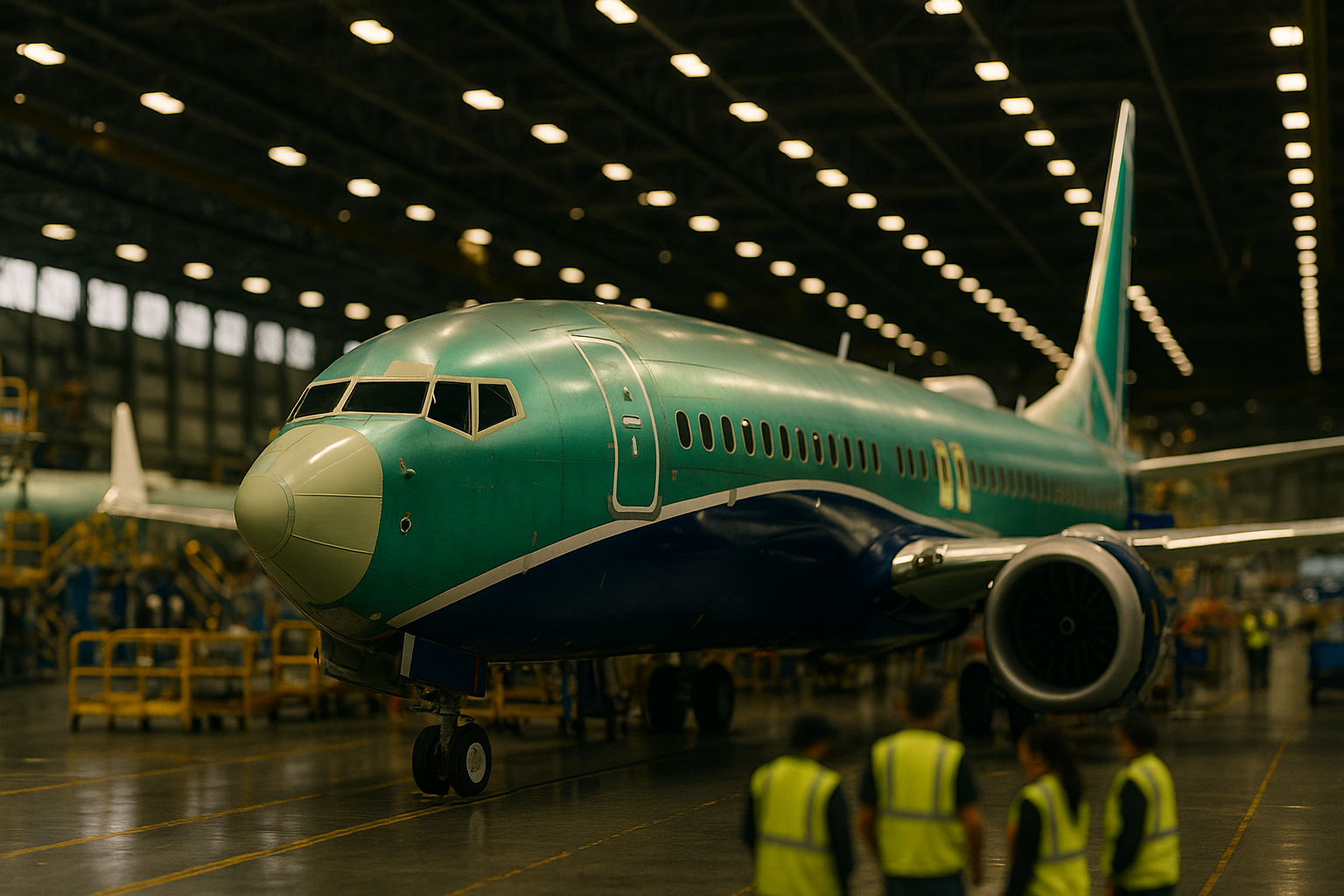
The headline number Wall Street watched was the 737 MAX production rate. Boeing said it has lifted output to 38 jets a month, the FAA-imposed ceiling that has capped the program since the January 2024 Alaska Airlines door-plug blowout. The company reaffirmed it expects regulators to clear a move to 42 a month “in the coming quarters” if quality-system audits remain on track (Reuters).
Cash burn finally narrows
The most consequential shift is on cash. Boeing burned roughly $4 billion of free cash flow in Q1 2025 as parts shortages and a machinist strike collided. This quarter the burn fell to about $2 billion, and CFO Brian West told analysts the company still expects to turn cash-flow positive in the second half of 2026 (Boeing earnings call). That trajectory matters because Boeing carries roughly $54 billion in net debt and needs durable cash generation to begin paying it down.
Defense, Space and Security swung to a small operating profit, helped by improving execution on the KC-46 tanker and T-7A trainer programs that have plagued the unit for years. Global Services revenue grew 10% year-on-year on resilient aftermarket demand, with the segment now generating more than $1 billion of quarterly operating profit (Boeing 10-Q).
MAX 7 and MAX 10 still in regulatory limbo
The unfinished business remains certification of the smaller MAX 7 and stretched MAX 10 variants, blocked by an outstanding redesign of the engine anti-ice system. Boeing said it now expects FAA certification of both variants in the second half of 2026, slightly earlier than the year-end window Ortberg had previously guided to. Southwest Airlines, the launch customer for the MAX 7, has not flown a single example of the variant it ordered six years ago.
The 787 Dreamliner program is another bright spot. Production has stabilised at five jets a month in Charleston, with Boeing reaffirming its goal of seven a month by 2026 year-end. Demand from Asia and the Middle East remains the program’s anchor, with Emirates, Saudia and several Chinese carriers holding large 787 backlog.
Tariff drag less severe than feared
Investors had braced for sharper tariff pain. The reciprocal tariff regime introduced by the Trump administration in early 2025, partially paused but still imposing duties on aluminum and certain titanium imports, has added an estimated $200 to $300 million of annualised cost to Boeing’s supply chain, the company said. That is meaningful but well below the worst-case scenarios analysts had modeled (Wells Fargo).
Boeing’s $540 billion order backlog gives it the longest visibility of any U.S. industrial. Whether the company can finally translate that backlog into delivered jets and stable cash flow is the question Ortberg’s second year has to answer. Q1 says the trajectory is right. The next two quarters will say whether it is sustained.


Discussion
Sign in to join the discussion.
No comments yet. Be the first to share your thoughts.