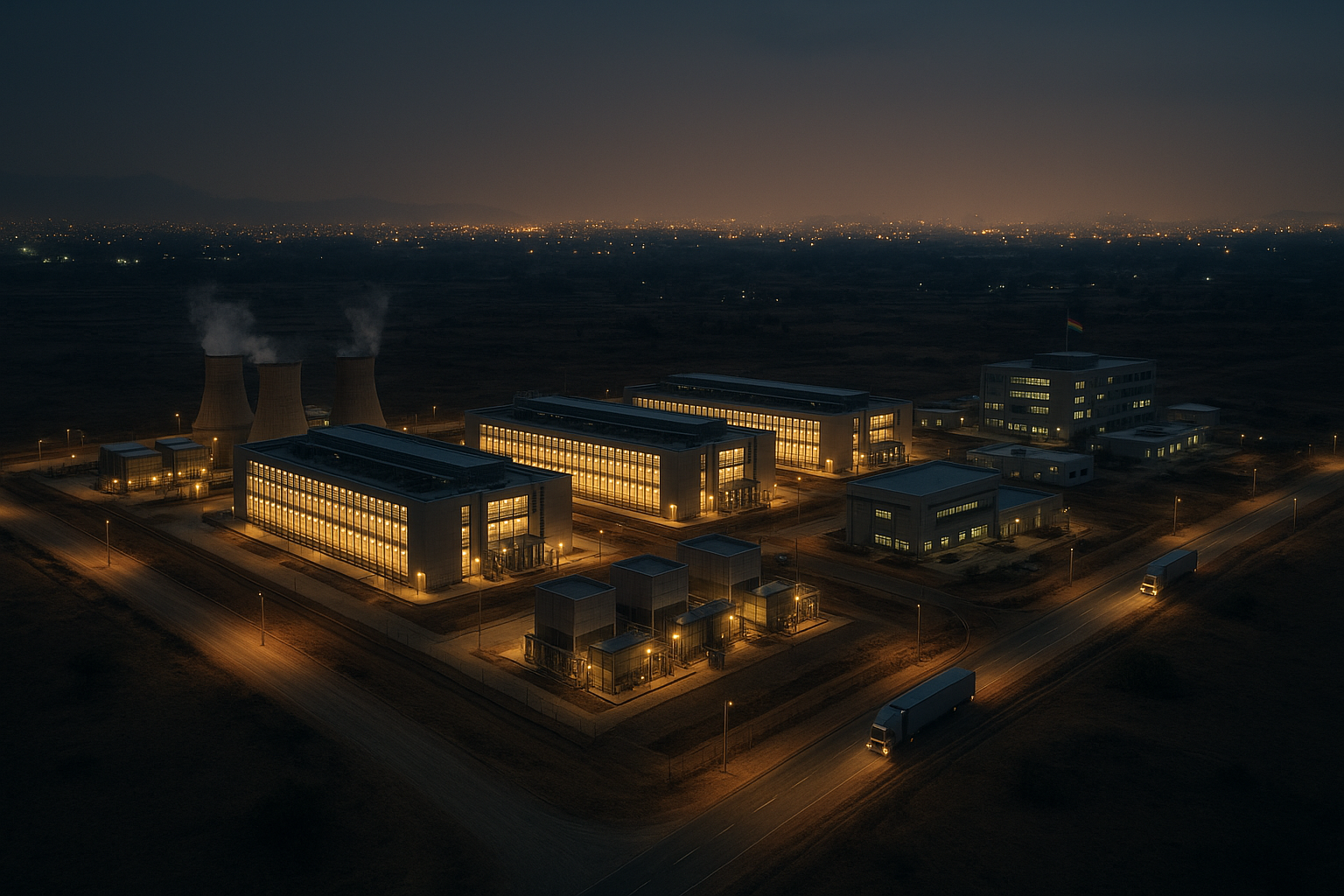
India’s electronics ministry on Tuesday confirmed an expansion of the country’s flagship IndiaAI compute pool, lifting the empanelled GPU count to roughly 38,000 from the 18,693 announced in March 2025. The fresh allocation, weighted toward Nvidia H200 and B200 silicon, deepens New Delhi’s bet that subsidised compute can anchor a domestic foundation-model industry without leaning entirely on US hyperscalers.
The Ministry of Electronics and Information Technology (MeitY) said 13 providers will share the new tranche under five-year contracts, with the government underwriting up to 40% of the per-GPU-hour rate for academic, public-sector, and qualifying startup workloads. The headline names — Reliance Jio Platforms, Tata Communications, Adani AI Cloud, Yotta Data Services, and CtrlS — together account for more than 28,000 GPUs across the new pool, according to figures circulated to bidders this week and reviewed by Reuters.
The new allocation table
Yotta retains the largest single block at roughly 9,500 GPUs after its expansion deal with Nvidia announced last quarter. Tata Communications follows with 6,800 units split between Mumbai and Hyderabad, while Reliance Jio’s allocation rises to 5,400 — most of it inside the upcoming Jamnagar facility that shares a power envelope with Reliance’s renewables footprint. Adani AI Cloud is allocated 4,200 GPUs across Noida and Visakhapatnam, and CtrlS adds 2,300, the company confirmed in a regulatory filing. The remaining 9,800 GPUs are spread across NxtGen, E2E Networks, Locuz, Sify, and four smaller empanelled bidders.
A senior MeitY official told reporters the average winning bid came in at INR 98 per GPU-hour for H100-class accelerators and INR 146 for B200-class, both meaningfully below the unsubsidised rates seen on AWS and Azure inside India. The official added that roughly 12% of the pool — around 4,500 GPUs — has been ring-fenced for Bharat-AI foundation model bids, including efforts at Sarvam AI, Krutrim, and CDAC’s Bhashini program.
Geopolitics and the supply chain
The expansion lands as Washington tightens export-control reviews on advanced AI accelerators destined for third countries. India is not on the US restricted list, but Indian providers have privately complained about lengthening lead times for B200 deliveries, which Nvidia has steered preferentially toward Stargate UAE and the largest US hyperscaler buildouts. To hedge, MeitY’s tender allows up to 15% of any bidder’s pool to be filled with non-Nvidia silicon, opening the door for AMD MI355X parts and the indigenous AUM accelerator from C-DAC, which entered limited sampling in March.
The Economic Times reported on Tuesday that India’s commerce ministry is also preparing a parallel INR 65,000 crore (around $7.8 billion) production-linked incentive top-up for AI server assembly, with Foxconn, Wistron, and Tata Electronics expected to bid. That pairs with the Tata-PSMC fab in Dholera, which remains on track for 28nm pilot wafers in late 2027 — too late to meaningfully change the import dependency this decade, but a foundation for downstream packaging and ASIC capacity later.
What it adds up to
For New Delhi, the calculus is increasingly explicit: subsidise compute, mandate a sovereign baseline, and give domestic LLM and vertical-AI players room to catch up while global supply normalises. Whether 38,000 GPUs is enough to matter against the multi-hundred-thousand-GPU clusters being stood up in Texas, Abu Dhabi, and Tokyo is a different question. But it is, for now, the largest sovereign AI compute commitment outside the G7-plus-UAE bloc — and it sets the template that Indonesia, Vietnam, and Brazil are watching closely as they draft their own compute strategies.


Discussion
Sign in to join the discussion.
No comments yet. Be the first to share your thoughts.