Samsung Electronics’ first-quarter operating profit jumped 56 percent year-on-year to ₩10.4 trillion ($7.5 billion) on the back of high-bandwidth memory shipments to Nvidia and a recovering smartphone cycle, according to results filed with Korea’s Financial Supervisory Service on Thursday. Revenue climbed 13 percent to ₩84.2 trillion ($60.4 billion), the company’s strongest first quarter since 2022.
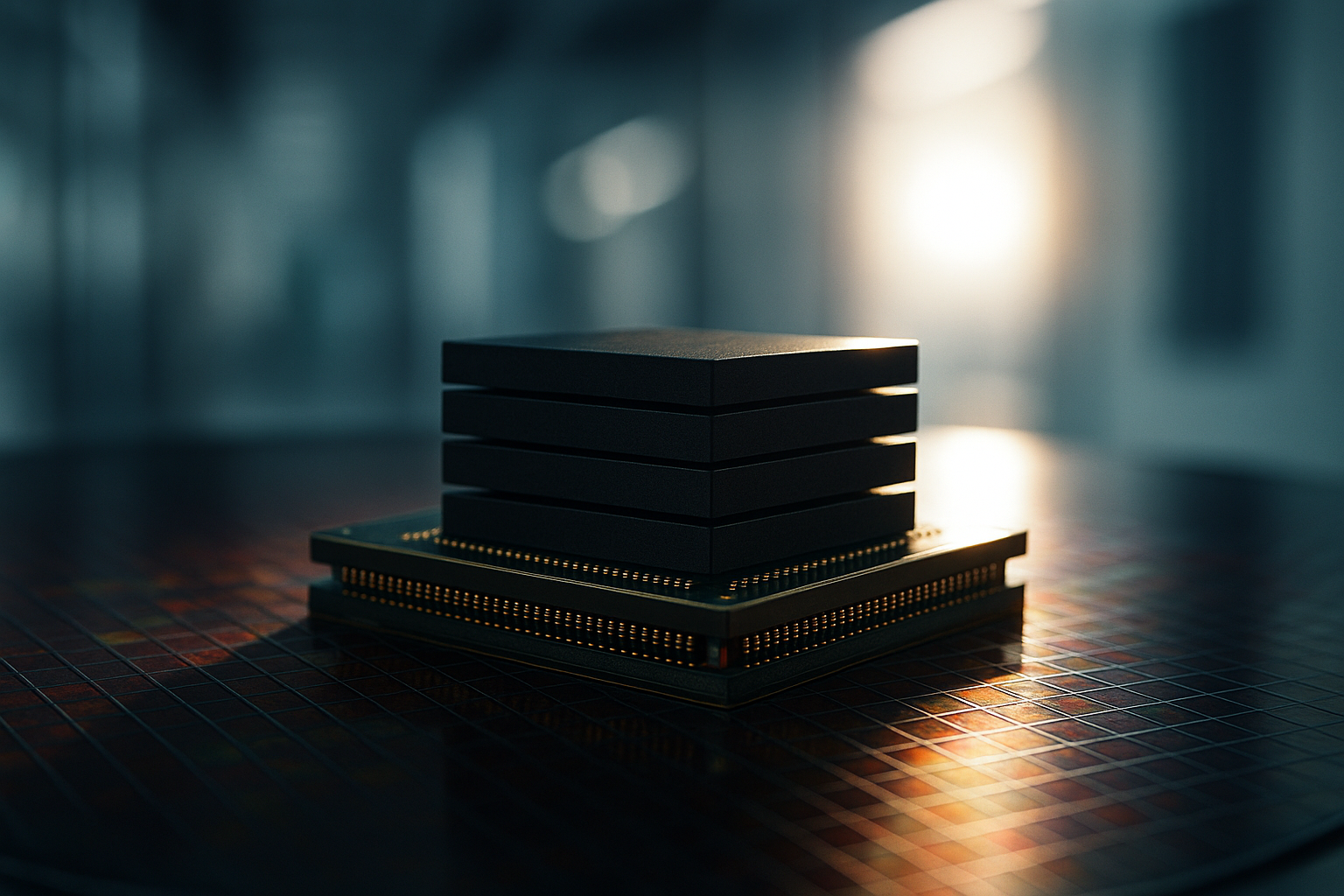
The headline beat came almost entirely from the chip business. Device Solutions, the semiconductor arm, posted operating profit of ₩7.1 trillion versus ₩4.6 trillion a year earlier, with memory alone contributing ₩6.2 trillion as HBM4 stacks moved from qualification samples into volume shipments for Nvidia’s Rubin platform. According to Bloomberg, Samsung now supplies HBM4 to Nvidia in parallel with SK Hynix, ending a roughly 18-month period in which Hynix was the dominant qualified vendor.
HBM4 ramp reshapes the memory mix
Samsung said HBM revenue more than tripled year-on-year, though it declined to give an absolute figure. Industry analysts at Counterpoint Research estimate Samsung shipped roughly 95,000 HBM4 stacks in the quarter, against an internal target of 110,000, with yield improvements at the Pyeongtaek P3 line cited as the bottleneck rather than demand. Average selling prices for advanced DRAM rose 22 percent sequentially as AI server build-outs continued to absorb supply.
The foundry division, long a drag on Device Solutions earnings, narrowed its operating loss to roughly ₩300 billion from a loss of close to ₩1 trillion a year ago. Chief Financial Officer Park Soon-cheol told analysts on the post-results call that 2-nanometer pilot output at the Hwaseong S3 line is on track for late 2026, though he stopped short of naming customers. Reuters reported earlier this month that Qualcomm and Tesla are evaluating Samsung’s 2nm process for second-source production.
Mobile rides the Galaxy S26 launch
Mobile eXperience, which houses Galaxy smartphones, posted operating profit of ₩2.8 trillion, up from ₩2.3 trillion a year ago. The Galaxy S26 Ultra, launched in late January with a redesigned Galaxy AI stack and on-device Gemini Nano 3 integration, contributed an estimated 12 million units in the quarter, according to Samsung’s own disclosure. Average selling prices rose 8 percent year-on-year, driven by mix shift toward the Ultra tier.
Display Panel and Harman remained roughly flat. The company guided full-year 2026 capital expenditure to ₩57 trillion, up from ₩48.4 trillion in 2025, with the bulk earmarked for HBM capacity, advanced packaging at the Onyang plant, and the 2nm foundry ramp.
What it signals for the AI memory cycle
Samsung’s Q1 confirms that the AI memory boom is no longer a single-vendor story. With HBM4 supply now split across two qualified Korean vendors and Micron’s HBM4 entering qualification later this year, hyperscaler buyers gain pricing leverage that has been absent through most of 2024 and 2025. The Financial Times noted on Wednesday that Nvidia’s recently disclosed FY27 capex guidance assumes HBM ASP softening of roughly 10 percent in the second half of 2026, a forecast that now looks more achievable.
For Samsung itself, the read-through is that the chip cycle is doing the heavy lifting again. Memory and HBM together accounted for nearly 60 percent of group operating profit in the quarter, the highest share since the 2018 super-cycle peak. Whether that durability holds depends on how aggressively Micron and Hynix expand HBM4 capacity into 2027, and on whether Samsung can finally turn its foundry business profitable before the next memory downturn.


Discussion
Sign in to join the discussion.
No comments yet. Be the first to share your thoughts.