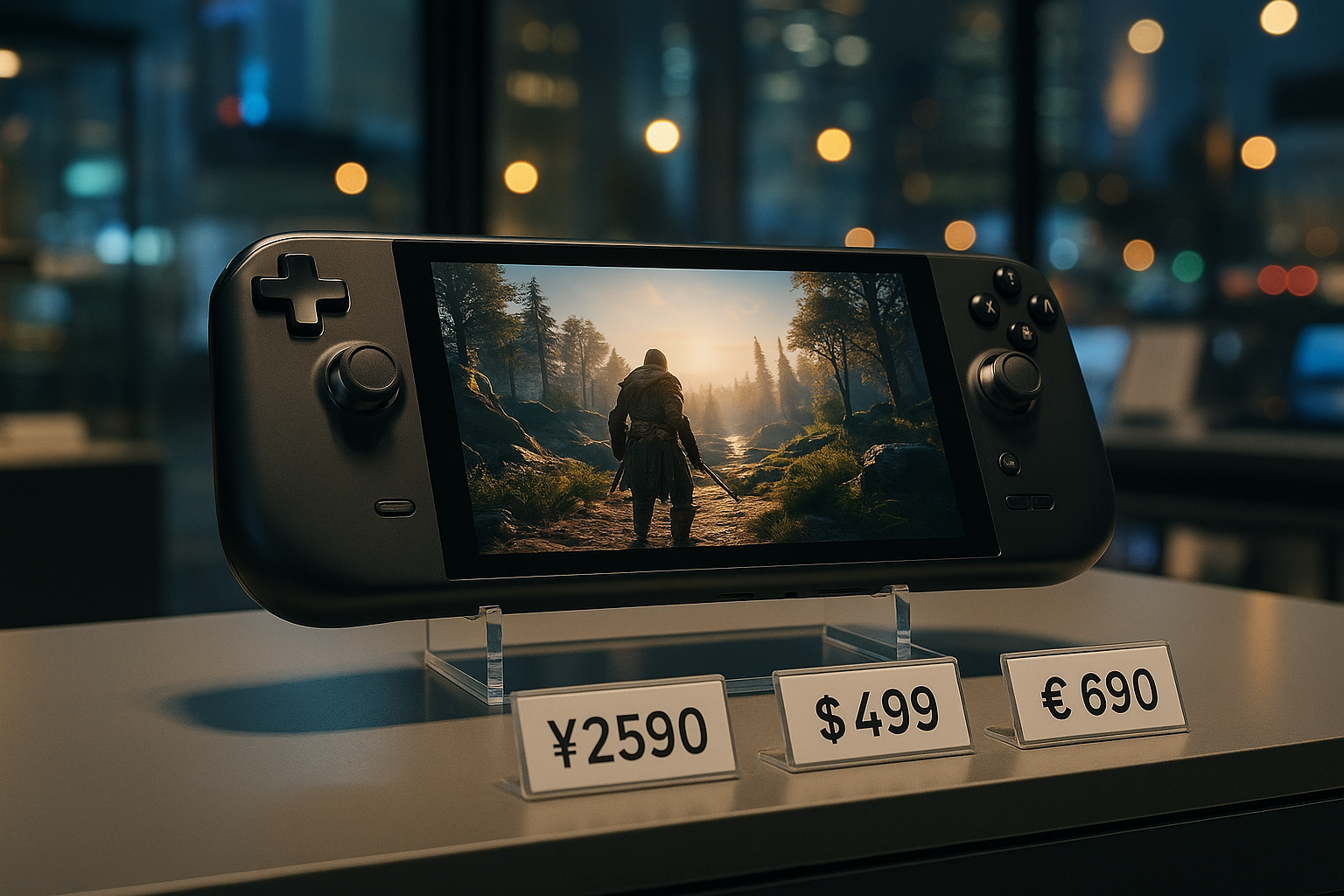
Nintendo is testing how much pricing power a console maker can still command in 2026. On Friday, the company said it will raise the manufacturer’s suggested retail price of Switch 2 in Japan this month and in the United States, Canada and Europe on Sept. 1, framing the move as a response to changed market conditions and a tougher global business outlook (Nintendo, May 8). The significance is not just for gamers. It is a clean signal that even high-demand consumer hardware is no longer being priced as if launch-day sticker prices are fixed.
A global reset for Switch 2 pricing
Nintendo’s biggest change is in Japan, where the Japan-only Switch 2 model will rise from ¥49,980 to ¥59,980 on May 25, a 20% increase by simple arithmetic from the company’s notice (Nintendo, May 8). Outside Japan, the U.S. price will rise from $449.99 to $499.99, the Canadian price from C$629.99 to C$679.99, and the European My Nintendo Store price from €469.99 to €499.99 starting Sept. 1 (Nintendo, May 8).
The company is not limiting the move to hardware. In Japan, an individual 12-month Nintendo Switch Online membership will increase from ¥2,400 to ¥3,000, while the 12-month family plan will rise from ¥4,500 to ¥5,800 effective July 1. Nintendo said the changes reflect “market conditions” that it expects to persist over the medium to long term (Nintendo, May 8).
Nintendo is raising prices from a position of strength
What makes the announcement notable is timing. Companies usually prefer to cut hardware prices as a console cycle matures, not raise them. Nintendo instead paired the pricing reset with evidence that Switch 2 is already moving at scale.
In materials released alongside its annual results, Nintendo said Switch 2 hardware sales reached 19.86 million units in the fiscal year ended March 31, 2026, while software sales reached 48.71 million units. The company added that Switch 2 “got off to a good start” after its June launch and said it wants to sustain that hardware momentum with more software in the market (Nintendo FY2026 results, May 8).
Nintendo also forecast net sales of ¥2.05 trillion and operating profit of ¥370 billion for the fiscal year ending March 31, 2027. Those numbers suggest management believes demand is strong enough to absorb at least part of the price increase without derailing the business (Nintendo FY2026 results, May 8).
Why this matters beyond Nintendo
This is bigger than one console launch. Nintendo’s decision shows that consumer tech groups are increasingly willing to reprice products mid-cycle when market conditions shift enough to threaten margins. That matters because gaming hardware sits at the intersection of semiconductors, global logistics and highly price-sensitive consumer demand.
The risk is straightforward: higher prices can slow adoption, especially in markets where households are already watching discretionary spending more closely. The opportunity, from Nintendo’s perspective, is also clear: if the Switch 2 installed base is strong and software demand holds, even modest regional price rises can protect profitability without changing the product itself.
For the rest of the industry, Friday’s announcement is a reminder that the post-launch price path for consumer hardware is no longer one-way. In 2026, the companies with the strongest franchises may decide that preserving margin matters more than preserving the illusion that launch pricing is permanent.
Sources: Nintendo, “Notice Regarding Price Revisions for Nintendo Products and Services,” May 8, 2026; Nintendo FY2026 results materials, May 8, 2026.


Discussion
Sign in to join the discussion.
No comments yet. Be the first to share your thoughts.