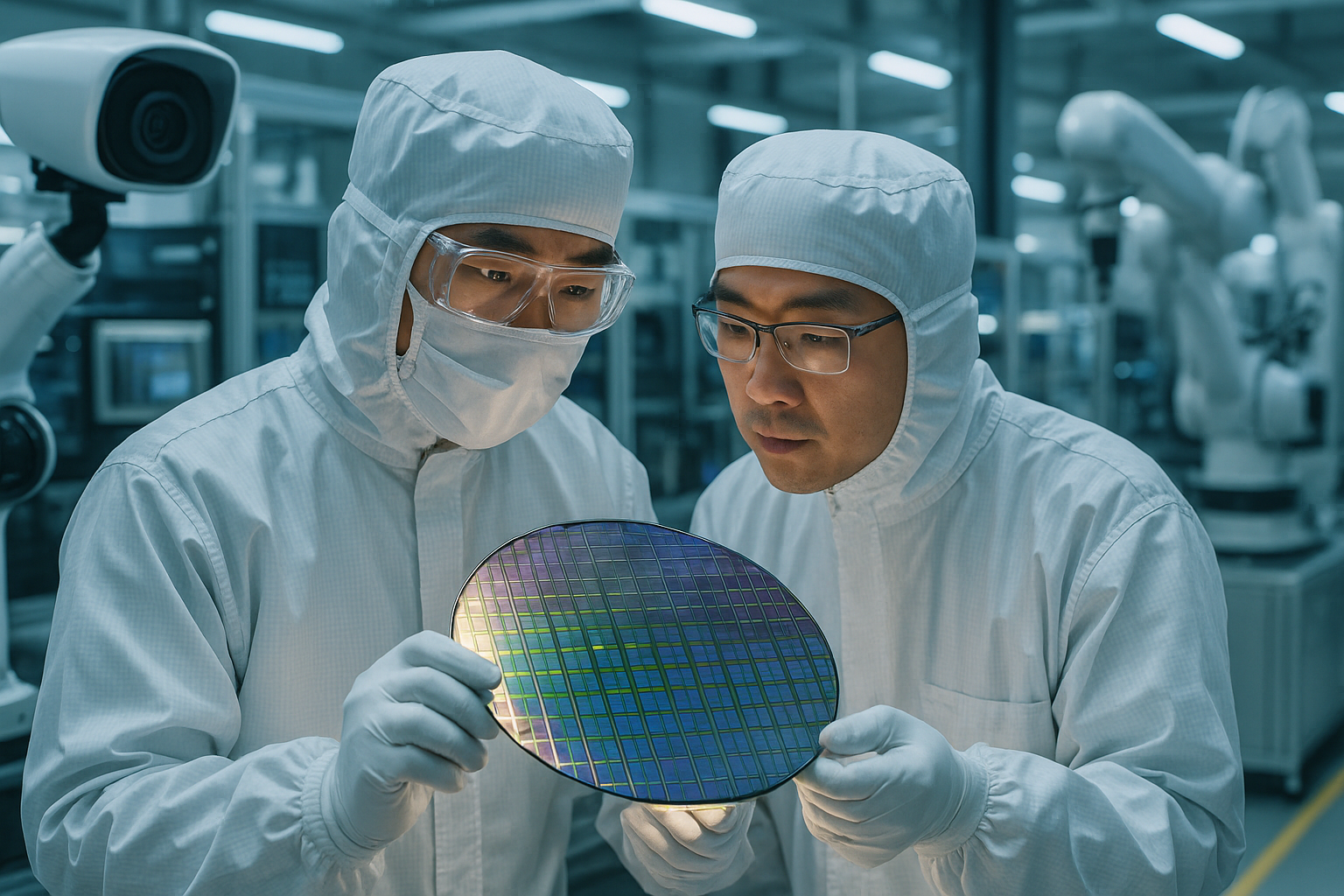
Sony and TSMC are moving deeper into a part of the AI stack that gets less attention than GPUs but may become just as strategic: image sensors. On Friday, Sony Semiconductor Solutions and TSMC signed an MOU to create a Japan-based joint venture to develop and manufacture next-generation image sensors, according to Sony’s May 8 release and a Reuters report published by Yahoo Finance. The immediate headline is hardware. The broader signal is that physical AI — cars, industrial systems and robots that need to see reliably in the real world — is starting to reshape where semiconductor capital gets deployed.
Not another camera-phone story
The companies said the venture would place development and production lines inside Sony’s newly built fab in Koshi City, Kumamoto Prefecture, with Sony as the majority and controlling shareholder (Sony; Reuters/Yahoo Finance). Sony also said separate capital spending is being considered for its Nagasaki plant, with both investment tracks to be phased against demand and premised on Japanese government support.
That matters because the end market is shifting. Sony and TSMC explicitly framed the venture around physical AI applications including automotive and robotics, not only handset imaging (Sony). Better sensors improve the first step in any autonomy stack: turning messy real-world light into usable data before software does the inference work. In other words, this is a bet that the next AI bottleneck is not only compute, but perception quality.
Japan gets a second semiconductor anchor
This is not the pair’s first collaboration. Reuters noted that their earlier venture, Japan Advanced Semiconductor Manufacturing, dates to 2021 and that its first Japanese fab reached full-scale output by the end of 2024 (Reuters/Yahoo Finance). The new deal extends that relationship from logic manufacturing into a more vertically coordinated sensor strategy, while Sony chief executive Hiroki Totoki described it on Friday as the company’s “first step to becoming fab-light,” according to Bloomberg as quoted by Yahoo Finance.
The timing also works in TSMC’s favor. Reuters reported in April that TSMC’s first-quarter revenue rose 35% year on year to T$1.134 trillion ($35.71 billion), beating an LSEG SmartEstimate of T$1.125 trillion (Reuters via Yahoo Finance, April 10). That growth gives TSMC room to back longer-cycle bets outside the core AI accelerator market while still leaning on the same demand wave that has pushed foundry capacity to a premium.
The real competition is over machine vision
Sony’s announcement also underlined the scale TSMC brings: the foundry says it deployed 305 process technologies and manufactured 12,682 products for 534 customers in 2025 (Sony). Pairing that manufacturing breadth with Sony’s sensor design position is a practical response to a market where AI systems increasingly need eyes as well as models.
The question now is execution. The venture is still non-binding and subject to a definitive agreement and closing conditions (Sony). But the direction is clear: as AI spending broadens from training clusters to factories, vehicles and robots, the winners will not be defined only by who builds the biggest model. They will also be defined by who controls the components that let machines see the world clearly enough to act.


Discussion
Sign in to join the discussion.
No comments yet. Be the first to share your thoughts.