Problem
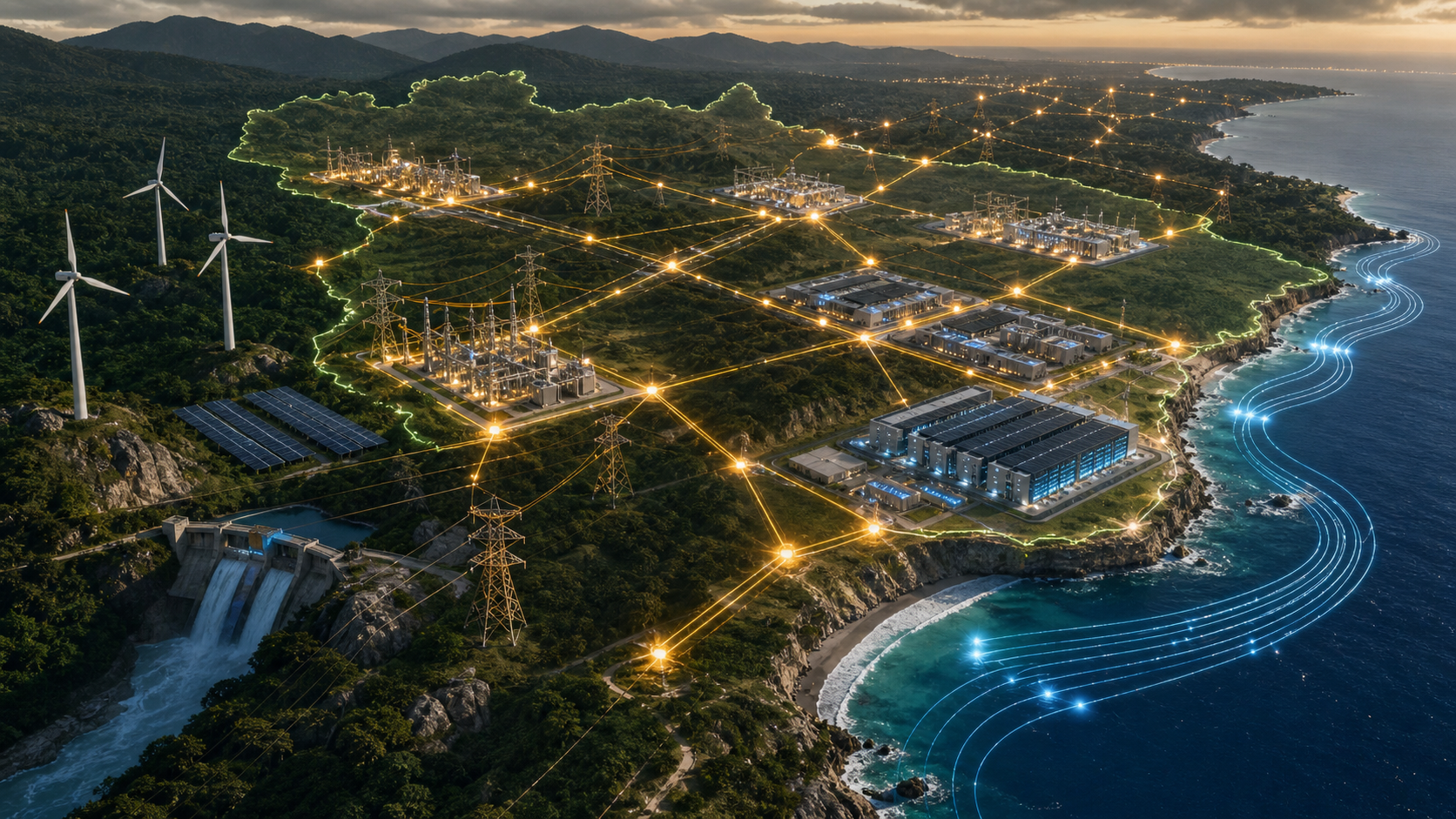
Brazil is trying to buy a place in the AI infrastructure map before the map hardens.
The vehicle is Redata, a special tax regime for data-center services. The old version, MP 1.318/2025, was published in September 2025. It has now lapsed. The live vehicle is PL 278/2026, which the Senate lists as in progress and, as of the page checked on 17 May 2026, awaiting inclusion of an agenda request.
That status matters. Brazil does not yet have a settled regime. It has a policy race.
The Chamber approved PL 278/2026 in February and sent it to the Senate. Agência Câmara says the bill would suspend federal taxes for five years on data-center equipment purchases, covering cloud computing, high-performance processing, AI training and inference, and related services. The government estimate cited by the Chamber is a R$5.2 billion exemption in 2026, followed by about R$1 billion in each of the next two years.
That is the price of entry.
The argument for paying it is not that Brazil lacks cloud demand. It is that AI infrastructure is becoming an industrial location problem. Chips matter. So do latency, tax treatment, land, water, fiber, power contracts, substations, and the willingness of regulators to make large electrical loads physically possible.
Brazil is not waiting for foreign cloud companies to decide that Latin America deserves more capacity. It is trying to alter the economics before those companies finish allocating their next campuses.
Analysis
The policy has two layers.
The first is tax. Redata reduces the cost of importing or buying the expensive kit inside a data center: GPUs, switches, racks, servers, and other information-technology equipment. The Ministry of Development, Industry, Trade and Services describes Redata as part of a broader National Data Center Policy, with commitments on environment, local content, donated storage capacity, and R&D investment.
The second layer is grid planning. That is the harder part.
Brazil’s Energy Research Office, EPE, says the effect of Redata was immediate in the connection queue. A little more than 60 days after publication of the measure, new data-center projects seeking minimum-global-cost studies from the Mines and Energy Ministry added 6.4 GW. The total pipeline in process at the ministry rose from 19.8 GW in September 2025 to 26.2 GW in November 2025.
That is the headline number. EPE’s caveat is the more useful one. The agency says effective delivery over the 10-year horizon depends on transmission and telecom infrastructure, financial viability, and new connection-guarantee rules.
The geography shows why. EPE says projects are concentrated in Sao Paulo, especially the Sao Paulo and Campinas metropolitan regions. Transmission studies have already recommended about R$1.6 billion of new investment for the Sao Paulo system, unlocking around 4 GW of connection margin. More work expected for 2026 auctions could add about 5 GW across the state. Rio de Janeiro needs a 2026 study to evaluate reinforcement options for about 4 GW of new projects. Rio Grande do Sul has a project under study with demand of up to 5 GW. The Northeast has a study under way that could increase large-load connection capacity by 4 GW.
This is not a normal industrial subsidy. It is a tax bill attached to a power-system redesign.
Brazil has assets that make the bet plausible. The Chamber report cites a power mix with more than 86% renewable sources, a real advantage for hyperscalers trying to buy lower-carbon capacity. Microsoft has already committed R$14.7 billion over three years for cloud and AI infrastructure in Brazil and says it will expand across several data-center campuses in Sao Paulo. Tecto’s Mega Lobster facility in Fortaleza, backed by more than R$550 million, gives the Northeast a different pitch: submarine cable proximity, renewable power, and lower water-use cooling.
The newer project queue is larger than those examples. Rio Grande do Sul says the Scala AI City project is being designed for international AI loads and points to roughly 200 MW of installed and developing Scala capacity, more than R$12 billion already invested by the company, and over 7 GW of power infrastructure reserved for future expansion. RT-One says it has raised R$15 billion for AI data centers, including an initial 100 MW campus in Uberlandia, an initial aggregate capacity of up to 200 MW with Paraná, and a modular path above 400 MW per campus.
Those are not theoretical indicators. They show that Brazil has live demand, live projects, and some regional differentiation.
The weak point is whether public money creates a durable advantage or merely subsidizes global cloud balance sheets.
PL 278/2026 tries to answer that with conditions. The Chamber text requires data-center beneficiaries to serve at least 10% of effective processing, storage, and data treatment to the domestic market, meet sustainability criteria, contract or self-produce all power demand from clean or renewable sources, keep annual water-efficiency at or below 0.05 liter per kWh for cooling, and invest 2% of the value of tax-benefited products in Brazil. It also allows the 10% domestic-processing obligation to be replaced by an additional 10% R&D investment.
The structure is sensible. It is also leaky.
The domestic-processing rule is measured by annual gross revenue, not a strict unit of compute. The Chamber story notes that a company could meet the quota with higher domestic prices while delivering less than 10% of comparable processing. That is not a footnote. It is the difference between a sovereignty policy and a discount program with local branding.
The regional incentives are more serious. Projects in the North, Northeast, and Center-West get reduced domestic-processing and investment obligations: 8% and 1.6%, rather than 10% and 2%. Forty percent of support for digital-economy chain projects must go to the North, Northeast, and Center-West. That pushes the policy beyond Sao Paulo, where the market already wants to build.
The problem is that electricity follows physics before politics. If Sao Paulo has fiber, customers, skills, and better near-term connection margins, incentives may slow concentration rather than reverse it. The Northeast may have clean energy and cable landings, but hyperscale AI buyers still care about latency, operational depth, equipment logistics, and grid deliverability. A subsidy can make a region eligible. It cannot make it ready.
Implications
Brazil’s AI infrastructure policy should be judged by grid outcomes, not press releases.
The wrong metric is the announced pipeline. A 26.2 GW queue is not 26.2 GW of usable AI capacity. Some projects will fail on financing. Some will lose priority. Some will wait for transmission work. Some may be tactical applications designed to secure a place in the queue before rules tighten.
PNAST is the enforcement mechanism to watch. MME’s April 2026 rule says access seasons will calculate remaining capacity at transmission points, run competitive processes when demand exceeds available capacity, and rank bids mainly by a R$/kW premium. That premium is not refundable and is supposed to reduce transmission-use charges. In plain terms: if five AI campuses want the same scarce grid node, Brazil is moving toward an auction-like rationing process, not a handshake queue.
The better metric is connection margin converted into energized capacity, especially outside Sao Paulo. If the R$1.6 billion of recommended transmission work in Sao Paulo unlocks real projects, Redata will have done something useful but geographically predictable. If Rio, Rio Grande do Sul, Fortaleza, and other Northeast sites turn studies into powered campuses, Brazil gets closer to a national infrastructure strategy.
The fiscal test is stricter. R$5.2 billion in first-year tax expenditure can be defensible if it buys durable compute capacity, domestic AI access, R&D spillovers, and transmission upgrades that serve other loads too. It is much harder to defend if the result is imported hardware, exported compute, and a grid bill left behind for ratepayers.
This is the core of Brazil’s bet. The country has renewable power, a large market, submarine cable geography, and enough cloud demand to matter. It also has a long history of industrial policies that looked coherent until implementation met lobbying, regional politics, and fiscal pressure.
Redata is not just a data-center incentive. It is a test of whether Brazil can turn the AI boom into infrastructure policy rather than another tax preference. The Senate can pass the bill. The grid still has to pass the exam.


Discussion
Sign in to join the discussion.
No comments yet. Be the first to share your thoughts.