Korean HBM Is Turning Into Reserved Capacity, Not Ordinary Chip Supply
The useful read on high-bandwidth memory is no longer “tight supply.” AI memory is becoming reserved industrial capacity.
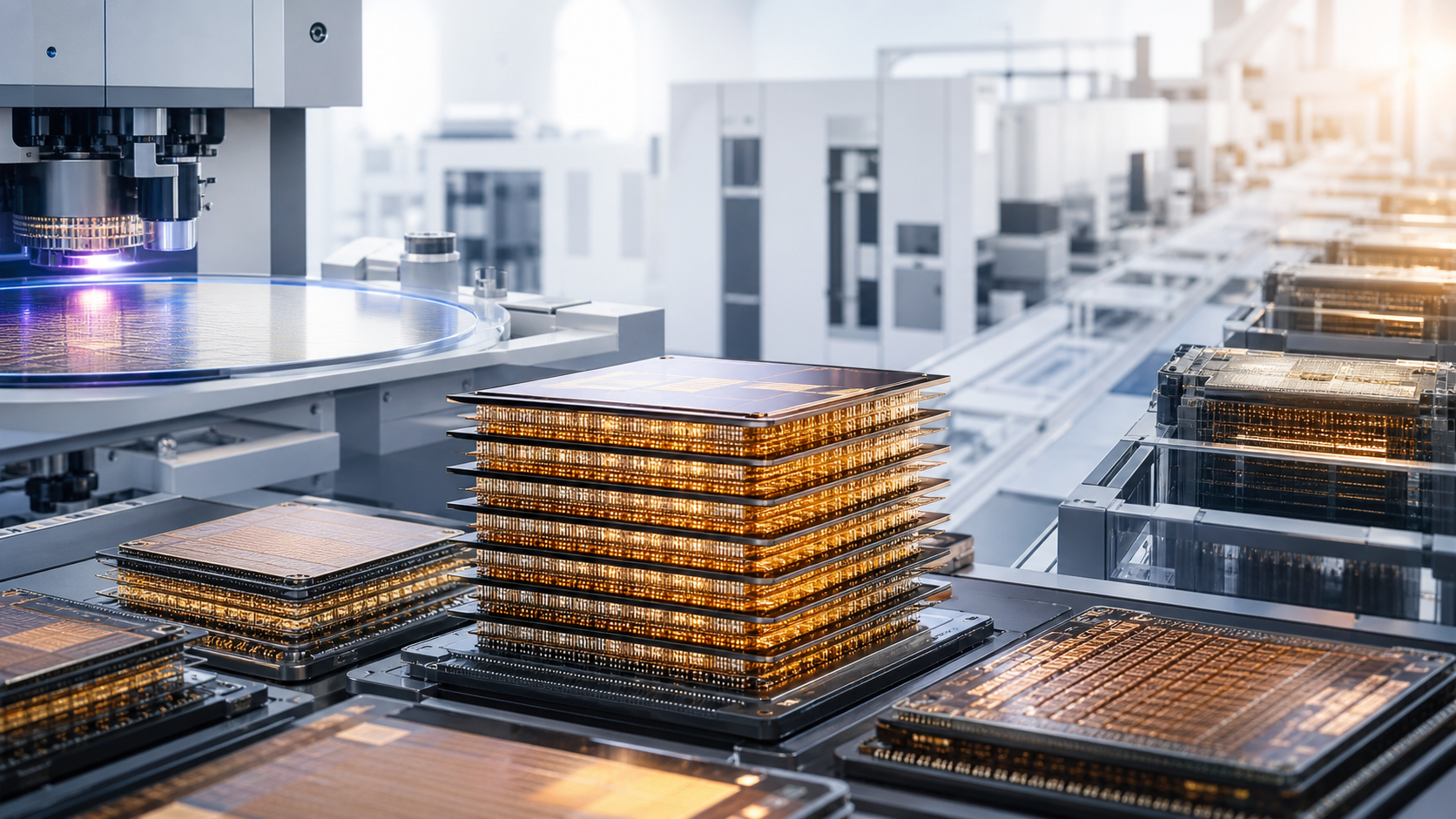
Samsung, SK hynix, and Micron still sell memory chips. But HBM is now being negotiated more like foundry slots and power capacity: years ahead, against specific platform ramps, with customers trying to reduce the risk that the next GPU cycle arrives before the memory does.
That shift matters because HBM is one of the few components that can slow the whole accelerator roadmap. Nvidia can announce Rubin. Cloud customers can budget for clusters. None of that helps if the memory stack is late, underqualified, or already spoken for.
The Supplier Message Has Converged
Samsung’s April report made the shortage unusually explicit. Reuters reported that the company had signed multi-year binding contracts with customers trying to secure supply, while Samsung said its chip division generated 53.7 trillion won in first-quarter operating profit, up from 1.1 trillion won a year earlier. The same report said Samsung expects the 2027 supply-demand gap to widen beyond 2026, based on demand already received.
That is not normal memory-cycle language. Memory producers usually try to preserve pricing flexibility and avoid overbuilding into a future downturn. Binding multi-year supply commitments point in the other direction. Customers are buying schedule certainty. Samsung is selling allocation.
SK hynix is describing the same pressure from a stronger HBM position. In its first-quarter 2026 results, the company said HBM, high-capacity server DRAM modules, and enterprise SSDs drove sales of higher-value products. It also said customer demand exceeds supply capacity. Reuters separately reported that SK hynix told investors client requests for HBM over the next three years already exceed production capacity.
Micron’s position is narrower but still supports the same frame. Its fiscal Q2 2026 release showed revenue of $23.86 billion, nearly triple the year-earlier quarter. In prepared remarks, Micron said both AI and traditional server demand are constrained by inadequate DRAM and NAND supply. It also said HBM4 36GB 12-high began volume shipment in calendar Q1 2026 for Nvidia’s Vera Rubin platform, with HBM4E expected to ramp in 2027.
Micron does not need an unsupported HBM4E lock-up claim to fit the story. Its numbers and roadmap already show the pressure.
Rubin Needs A Portfolio, Not A Favorite Supplier
The Nvidia side of the story is more precise than the buyer rumor mill. TrendForce said Samsung, SK hynix, and Micron were all in final HBM4 validation, with completion expected by Q2 2026. It also said no single supplier can fully satisfy Rubin requirements, so Nvidia is expected to use all three major memory suppliers for HBM4.
That is the cleanest evidence for “reservation” without overclaiming named hyperscaler pre-booking. The named platform is Rubin. The named buyer is Nvidia’s supply chain. The customer base includes cloud service providers accelerating AI servers, but public evidence does not show Microsoft, Amazon, Google, Meta, or OpenAI signing specific HBM reservation contracts with Samsung.
That distinction is not legal housekeeping. It changes the analysis.
If hyperscalers were directly and publicly locking up HBM, the story would be customer concentration. The documented story is subtler: GPU platform demand is pulling all three HBM suppliers into a coordinated roadmap, while memory makers sell future capacity to unnamed customers. The lock-up is real at the capacity layer. The named lock-up is not.
This is how scarcity travels through the stack. Nvidia wants optionality because one HBM vendor cannot support the Rubin ramp. Memory suppliers want commitments because new capacity requires tools, cleanrooms, packaging, and yield work. Customers want certainty because a missed memory allocation can strand AI infrastructure.
Capacity Is Being Built On Semiconductor Time
The supply response is visible, but not fast. SK hynix disclosed an 11.9 trillion won EUV equipment purchase from ASML, reported at about $7.9 billion, running through 2027. Tom’s Hardware, citing Bloomberg and analysts, said the order could cover roughly 30 EUV systems for HBM production at M15X and advanced DRAM at Yongin.
That order tells investors and buyers two things at once. SK hynix is spending aggressively. It is also admitting that the fix arrives over years, not quarters.
Samsung’s Q1 language points to the same lag. New factory construction has lead times. HBM requires advanced DRAM, stacking, packaging, and validation.
There is also a spillover effect. TrendForce said conventional DRAM prices surged from late 2025 as vendors recalibrated capacity between HBM and ordinary DRAM. Micron said server demand is constrained across DRAM and NAND. HBM is the premium bottleneck, but the pain leaks into the rest of memory.
That is the part consumer hardware companies hate. AI servers get allocation priority because they can pay and because their customers are buying strategic capacity. PC, mobile, and lower-margin embedded buyers get the aftershocks.
The Implication Is Pricing Power With A Timer
This is still memory. Supply eventually arrives. Margins tempt overbuild. Customers renegotiate. The industry has not repealed cyclicality because AI showed up with a large purchase order.
But the current HBM cycle is harder to treat as ordinary commodity tightness. The constraint is tied to named accelerator roadmaps, supplier validation windows, multi-year contracts, EUV equipment schedules, and fab ramps that extend into 2027. That gives Samsung and SK hynix unusual visibility. It gives Micron a cleaner path to expand without pretending it has displaced the Korean leaders.
The most accurate frame is reserved capacity, not hyperscaler hoarding. Samsung has binding multi-year contracts with unnamed customers. SK hynix says customer demand outruns its HBM production capacity for years. TrendForce expects Nvidia to need all three HBM suppliers for Rubin. Micron is shipping HBM4 into Rubin and building HBM4E for 2027.
That is enough.
AI memory is becoming infrastructure before it becomes abundant. In this market, the scarce product is not only HBM. It is a qualified place in the production queue.


Discussion
Sign in to join the discussion.
No comments yet. Be the first to share your thoughts.