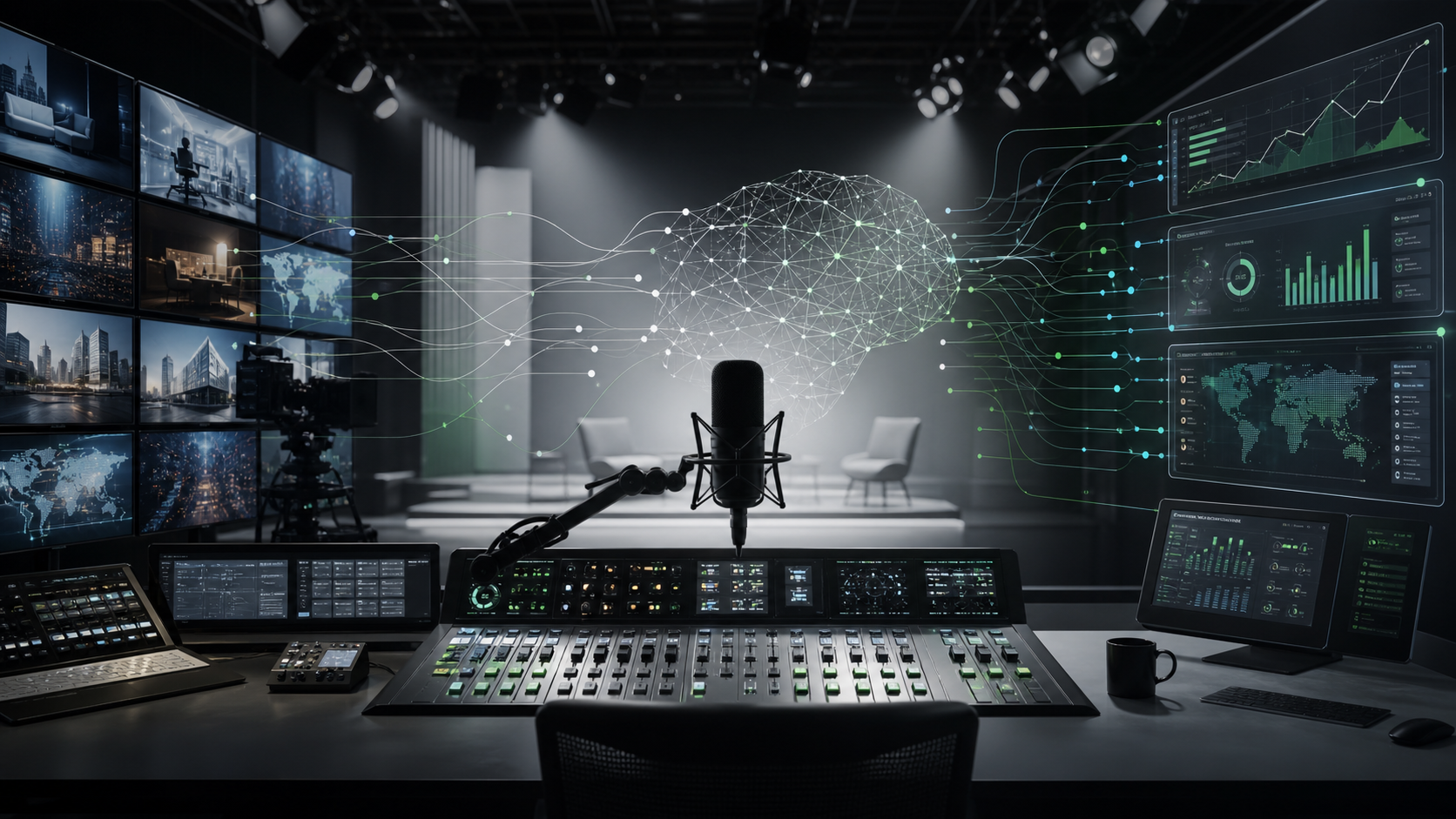
OpenAI announced on April 2 that it had acquired TBPN, the daily live technology talk show hosted by Jordi Hays and John Coogan, giving the ChatGPT maker its first obvious media asset at the same time it is pushing deeper into enterprise distribution. OpenAI did not disclose terms, and Axios also reported that the terms were not disclosed.
That opacity is useful. It keeps the discussion away from a simple publisher multiple and closer to the strategic question: whether OpenAI is treating media as a demand-shaping channel.
TBPN is not YouTube scale. It is closer to a daily market venue for founders, investors, operators and technology executives. OpenAI’s announcement describes TBPN as a weekday show airing from 11 a.m. to 2 p.m. Pacific across X, YouTube, Spotify, Apple Podcasts, LinkedIn, Substack and Instagram. Axios described it as a three-hour daily show covering technology and finance in an ESPN-style format. The reported asset is not only audience size. It is cadence, guest access and cultural proximity to the buyers and builders who normalize enterprise software decisions before procurement does its paperwork.
Distribution Is Not Trust
OpenAI already has distribution. The company said in April that ChatGPT has six times the monthly web visits and mobile sessions of the next largest AI app, and four times the total AI time spent of the next largest AI app. In the same update, OpenAI said enterprise now represents more than 40% of revenue and is on track to reach parity with consumer by the end of 2026.
That creates a different communications problem from the one most software companies face. OpenAI does not need awareness. It needs legitimacy in increasingly narrow rooms: Fortune 500 security reviews, regulated-industry deployments, policy debates, developer communities and executive committees deciding whether to build around a model provider whose products change quickly and whose governance still attracts scrutiny.
Media distribution helps with awareness. Repeated, trusted formats help with permission.
TBPN gives OpenAI a daily surface where AI is discussed in the grammar of builders rather than the grammar of corporate announcements. That matters because frontier-model adoption is becoming less about a single product launch and more about a sequence of confidence transfers. A CIO may not buy because a show host likes ChatGPT. But a founder, engineer, investor or customer may accept a premise sooner if it is repeated in a familiar forum: that agents are ready for real work, that model risk is manageable, that OpenAI is the default partner for applications, commerce or enterprise workflows.
This is the same reason financial television mattered for markets long before every viewer became a trader. The medium did not merely report price action. It taught a professional audience which signals deserved attention.
The Pattern Around OpenAI
The TBPN deal sits inside a wider distribution build-out.
OpenAI’s consumer surfaces have widened beyond the chatbot. The company has pushed ChatGPT into voice conversations, shopping discovery and app-like workflows. Its WhatsApp transition notice points users back to ChatGPT on iOS, Android, web and ChatGPT Atlas on macOS, with features such as voice conversations, deep research and file uploads. Its Sora announcement placed video generation inside a short-form creative product before OpenAI later discontinued the Sora app experience on April 26, according to OpenAI’s help page.
Partnership distribution is also getting heavier. OpenAI and Amazon announced a February multi-year partnership in which AWS became the exclusive third-party cloud distribution provider for OpenAI Frontier. OpenAI also described a broader infrastructure and platform strategy spanning Microsoft, Oracle, AWS, CoreWeave, Google Cloud, Nvidia, AMD, AWS Trainium, Cerebras, Broadcom, Oracle, SBE and SoftBank.
The media acquisition is different from those deals. Cloud agreements buy reach into enterprise accounts. Retail or app integrations buy transaction paths. A daily technology show buys repeated framing.
That is why the trust question matters. If TBPN remains editorially credible, OpenAI gets access to a live conversation whose value came from not being official. If it becomes house media, the asset decays. The depreciation would not show up in a balance sheet. It would show up in guest quality, audience skepticism and the speed at which competitors decline invitations.
The acquisition therefore carries a built-in contradiction. OpenAI bought TBPN because the show was trusted by an audience OpenAI wants to influence. Ownership is the fastest way to put that trust at risk. Conveniently, this is also the oldest media problem in the book. The wrapper is just newer and has better GPUs.
Rivals Are Choosing Different Channels
Other model labs are chasing distribution, but not in the same media form.
Anthropic has leaned into enterprise routes and partner-led adoption. In March, it announced a $100 million Claude Partner Network for organizations helping enterprises adopt Claude. In April, it said Claude is available through AWS, Google Cloud and Microsoft Azure, and that more than 100,000 customers run Claude on Amazon Bedrock. Anthropic is not buying a creator-led media property. It is buying implementation capacity, channel confidence and cloud neutrality.
Google starts with the opposite advantage. It already owns mass distribution through Search, Android, YouTube, Workspace, Chrome and Cloud. Its Gemini 3 announcement said AI Overviews reached 2 billion monthly users and the Gemini app surpassed 650 million monthly users. Google does not need to acquire a technology talk show to reach a technical audience. It needs to insert Gemini into products people already use, from Search’s AI Mode to Workspace and Google Vids.
xAI’s distribution is more blunt. Grok’s advantage has been proximity to X, the real-time social network Elon Musk already controls. TechCrunch reported in 2025 that xAI acquired X in an all-stock deal valuing xAI at $80 billion and X at $33 billion. Whether that structure is elegant is beside the point. xAI’s core media channel is not a show. It is the feed.
OpenAI sits between these positions. It has the breakout consumer application, but not Google’s owned internet surfaces. It has enterprise ambition, but not Anthropic’s trust-first brand posture. It has cultural visibility, but not xAI’s social graph. Buying TBPN is a way to rent, then own, a small but influential piece of the conversation layer.
What Changes
The strategic question is not whether OpenAI can run a media company. It is whether model labs now view media as part of go-to-market infrastructure.
For enterprise AI, the bottleneck is moving from access to confidence. Models are available through clouds, APIs, desktop apps, developer tools and consumer interfaces. Buyers can try them. The harder work is persuading organizations that the provider is durable, safe enough, useful enough and central enough to standardize around.
That persuasion does not happen only in sales calls. It happens in podcasts, demo videos, founder interviews, conference clips, benchmark debates and real-time commentary around every launch. Model labs have learned that distribution without narrative leaves too much room for others to define the category.
OpenAI’s TBPN acquisition suggests the next phase of AI competition will not be fought only over parameters, chips or cloud contracts. It will also be fought over the places where professional opinion is formed before a request for proposal exists.
Buying distribution is relatively easy. Keeping trust after the purchase is the hard part.


Discussion
Sign in to join the discussion.
No comments yet. Be the first to share your thoughts.