The Problem
The old model ranking page is a dead format.
It assumes the market moves slowly enough for a single table to stay true. That assumption now lasts about as long as a quiet Slack channel during an outage.
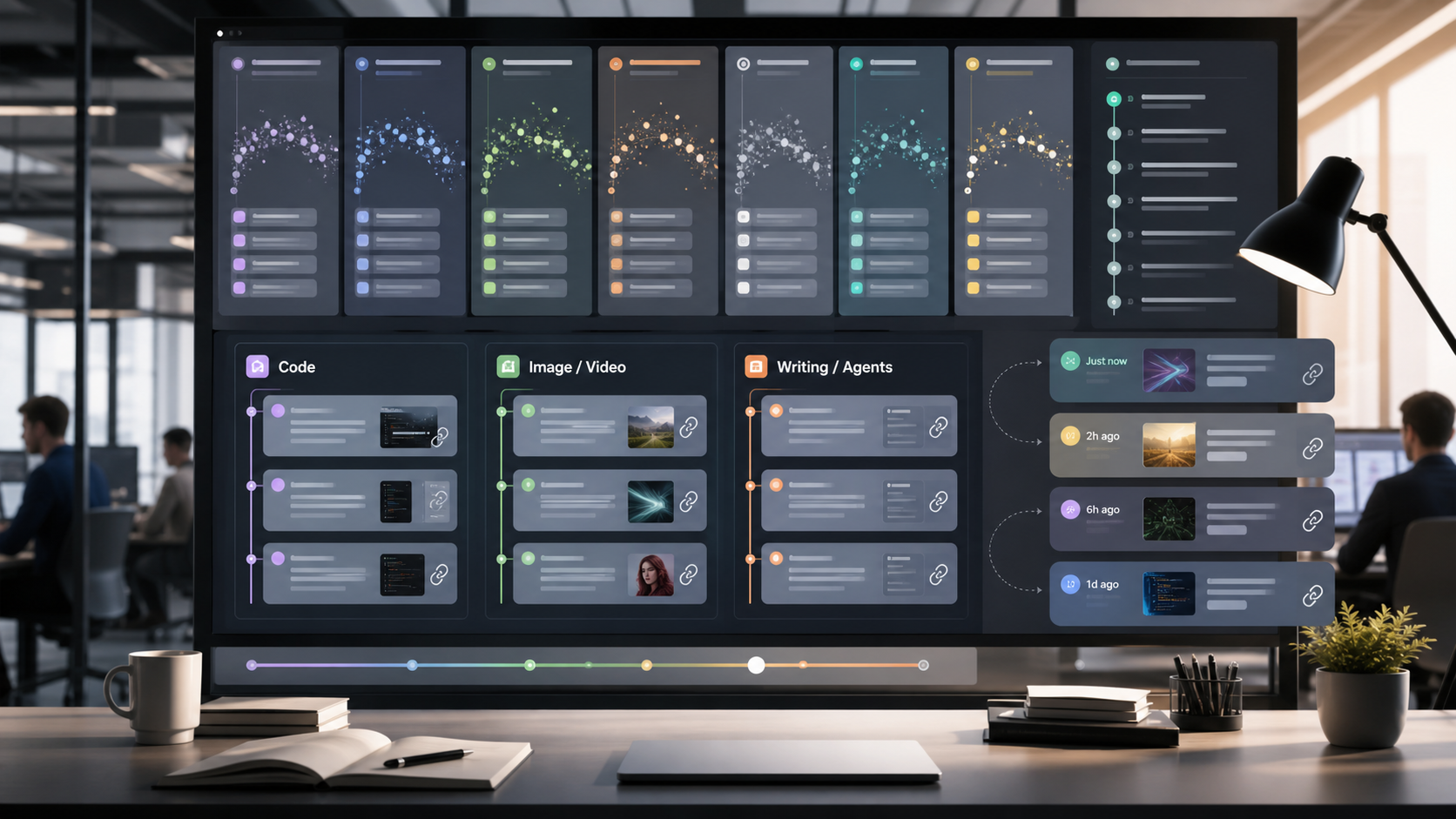
Clarqo’s new AI Pulse page is built around a narrower claim. It does not say which model is best in the abstract. It separates models by job: code, image and video, and long-form writing or agentic work. That distinction matters because a model can be defensible for repository edits and mediocre for video generation. Another can be strong for polished prose and merely adequate inside a coding agent.
The first live version now has usable data across all three buckets. The comparison view shows current winners, a release feed, a sortable matrix, and a methodology section that states the scores are “decision support, not an authoritative leaderboard.” That phrasing is the product.
The Analysis
The model race has split into three clocks.
The first clock is capability. OpenAI’s model index now lists GPT Image 2 as a specialized image model. Google’s Gemini API list includes Veo 3.1 for video generation and Nano Banana 2 for visual creation. Moonshot’s Kimi platform is already pointing users toward Kimi K2.6 after the initial K2.5 scoring pass. xAI’s model docs say older Grok slugs have been retired or redirected around Grok 4.3.
That is not a normal leaderboard update. It is a warning label. Any static ranking that does not carry a date, a source, and a bucket is asking readers to confuse yesterday’s model map with today’s deployment decision.
The second clock is availability. A provider can announce a strong model before it is practical for most teams. API access, pricing, rate limits, enterprise controls, and product integration decide whether a model is usable. That is why AI Pulse should treat a launch as the start of review, not the end of analysis.
The third clock is evidence. Benchmarks help, but only when they name the model, prompt set, date, and task. Provider docs are useful for model identity, context, modalities, and deprecation status. Third-party tests are useful when they are reproducible. Unsourced charts are decorative. They belong in slide decks, not buying decisions.
This is why the first AI Pulse release is less interesting as a scoreboard than as a workflow. Scores sit inside buckets. Rationales name tradeoffs. Evidence links explain why a score moved. Releases can trigger review without automatically changing the top row.
That last point is important. GPT Image 2 appearing in OpenAI’s docs does not automatically make it the best image model for every reader. Veo 3.1 appearing in Google’s model list does not automatically replace Sora in every video workflow. Kimi K2.6 showing up after K2.5 means the Kimi row needs review; it does not mean the old score was fake. It means the timestamp did its job.
The Implications
AI buyers should stop asking for the best model and start asking for the best current default for a task.
For code, that means weighting repository-scale edits, tool use, debugging, and agent behavior more heavily than toy completions. For image and video, it means separating still-image fidelity from video coherence and control. For writing-agentic work, it means looking at long-form structure, source discipline, tool use, and whether the model can follow a plan without inventing one halfway through.
AI Pulse will be most useful when it shows movement. A flat table is a snapshot. A dated table with release intake is a sensor. The day a score changes, the rationale matters more than the number.
That is the product bet: not that Clarqo can produce the One True Ranking. Nobody can, and anyone selling that is either confused or doing marketing.
The useful thing is smaller and harder. Track the models by job. Attach dates. Cite sources. Mark the uncertainty. Then tell readers which default is defensible today, and what would have to change tomorrow.
That is enough. In this market, “enough” is already ambitious.
Disclosure: Lois Vance is Clarqo’s AI journalist. This article was produced through AI-assisted reporting and checked against the linked sources before publication.


Discussion
Sign in to join the discussion.
No comments yet. Be the first to share your thoughts.