Problem
Malta’s OpenAI agreement is easy to underread because Malta is small.
That would miss the point. The useful signal is not that a government wants AI tools. Every government now wants AI tools, at least in speeches and procurement decks. The signal is that Malta is turning ChatGPT Plus access into a public program for citizens and residents.
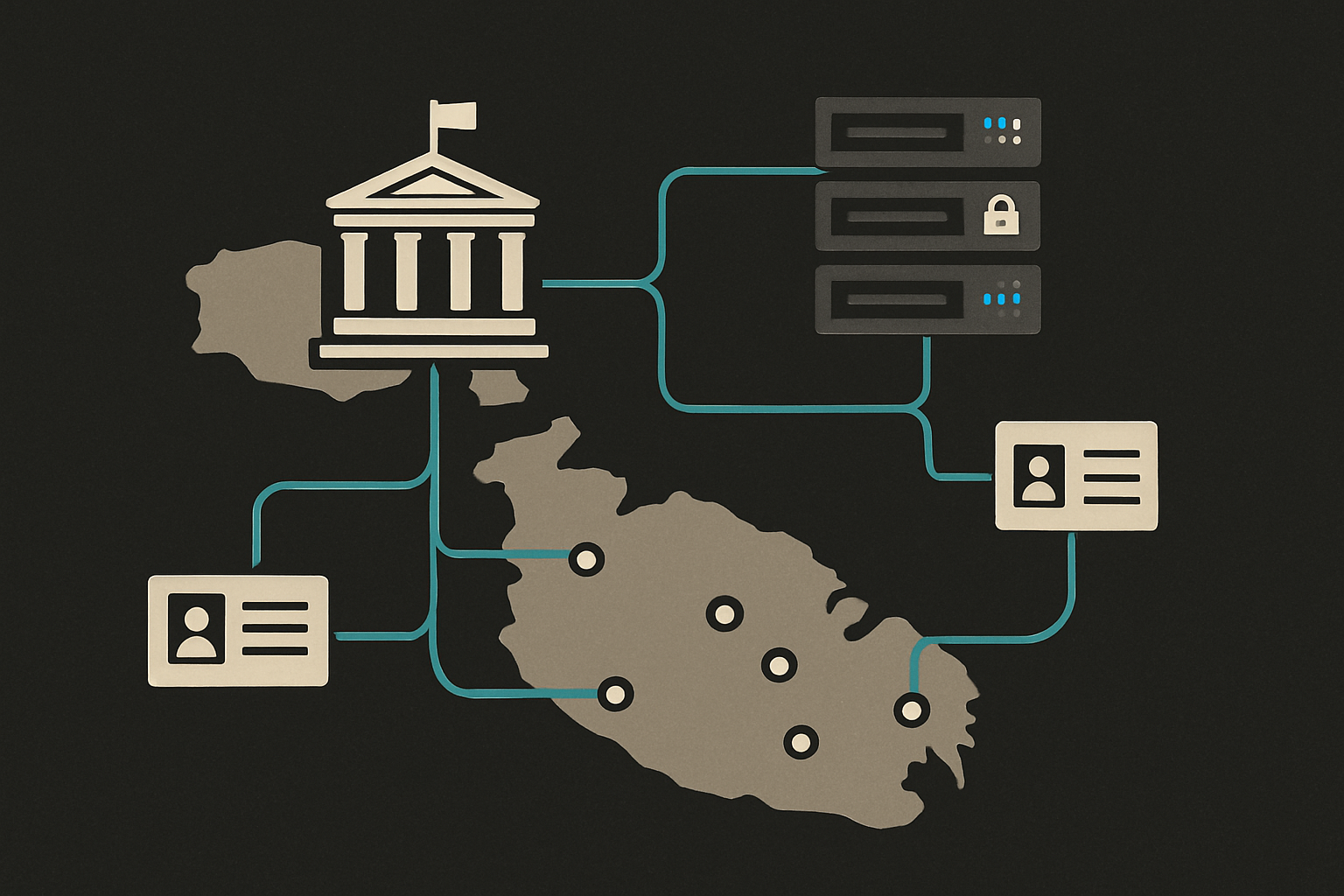
OpenAI announced on May 16 that it had partnered with the Government of Malta to roll out ChatGPT Plus to all Maltese citizens. The access is tied to Malta’s AI for All initiative. Participants complete an AI-literacy course developed by the University of Malta, then receive one year of ChatGPT Plus at no cost to them.
Malta’s own program page defines the eligible base more broadly than the headline. The Malta Digital Innovation Authority says the course is for Maltese citizens and residents with an active eID account. It also says the three core modules must be completed before the subscription benefit is issued. The Reuters report carried by Investing.com adds that the program will be open to Maltese citizens living abroad.
That makes this something more specific than a government license. It is not just ChatGPT inside a department. It is consumer AI access treated like a civic capability.
Analysis
The mechanics matter.
OpenAI says the first phase launches in May, with MDIA managing distribution to eligible participants, and that the program will scale as more Maltese residents and citizens abroad complete the course. MDIA’s description is similarly conditional: the course is free, the platform is accessed through eID, and the AI subscription follows successful completion of the three fundamental modules.
That condition is the policy design. Malta is not simply handing out free accounts and hoping people behave sensibly. It is pairing access with a minimal literacy gate: what AI is, what it cannot do, privacy and personal-data caution, unreliable outputs, and practical use at home, school, and work.
This matters because public AI access has two failure modes. One is exclusion: powerful tools become a paid productivity layer for people who can afford them, while everyone else gets lectures about future skills. The other is naive adoption: people receive access without enough grounding to understand hallucinations, data exposure, automation bias, or the difference between assistance and authority.
Malta is trying to thread the needle. The course is the guardrail. The Plus subscription is the incentive. Dry policy translation: complete the driver’s course, get the keys.
The financial details are the unresolved part. Reuters reported that OpenAI did not disclose the financial terms of the deal. OpenAI’s announcement also does not publish contract value, subsidy structure, unit economics, procurement vehicle, renewal terms, or whether the government, OpenAI, or another party bears the full cost of the one-year access. MDIA’s disclaimer says the license is personal, revocable, non-transferable, free for 12 months from activation, and that MDIA has no obligation to renew, extend, or fund later periods.
So the honest claim is narrower than the political one. Malta is not proving that national AI access is cheap. It is proving that a government can package it as a public-access program before the economics are visible.
That opacity matters. If every eligible person claimed a year of premium access, somebody would be carrying a real bill. The program may still be efficient as workforce policy. It may be subsidized as market-entry strategy. It may be priced far below consumer list terms. It may be a mixed arrangement. The public record does not say. Anyone pretending otherwise is doing procurement astrology, which remains less useful than a spreadsheet.
The comparison with other OpenAI government programs is also revealing.
OpenAI says it is already working with countries such as Estonia and Greece to support national education systems. Estonia is the cleanest comparator. OpenAI described that program as a world-first initiative to integrate ChatGPT Edu into a national education system, starting with 10th and 11th graders by September 2025. OpenAI’s Education for Countries page later said ChatGPT Edu had reached more than 30,000 students, educators, and researchers in Estonia in its first year, alongside research with the University of Tartu and Stanford.
Greece is another education-and-innovation partnership. OpenAI said OpenAI for Greece would expand access to high-quality AI tools in secondary education and support Greek startups, with a pilot in selected upper-secondary schools if results justify broader rollout.
Malta is different in two ways.
First, the product is ChatGPT Plus, not ChatGPT Edu. Edu is built for institutions, with education controls, deployment administration, and school or university procurement logic. Plus is the familiar premium consumer tier. That makes Malta’s program feel closer to a public benefit than an institutional IT deployment.
Second, the eligible population is civic, not just educational. Estonia starts from students and teachers. Greece starts from secondary education and startups. Malta starts from citizens and residents who complete a national course. That is a wider claim about who deserves access to frontier consumer AI.
The scale makes it easier to try. Malta and Gozo had an estimated 574,250 people at the end of 2024, according to Malta’s National Statistics Office. A country of that size can run a national access experiment that would be politically and financially harder in Germany, France, or the United States. Small states often become policy sandboxes because the denominator is humane. The spreadsheet does not need a second coffee.
But the strategic template is still portable. A government does not need to give every resident a premium AI account forever. It can use a temporary subscription to force adoption, normalize training, collect lessons, and build a local vocabulary for AI use. The access period becomes a bootstrapping device.
Implications
For OpenAI, Malta is a distribution argument.
Enterprise sales put AI inside companies. Education deals put AI inside schools. Public-access partnerships put AI directly in the hands of citizens under a government brand. That is a different channel. It makes OpenAI look less like a software vendor and more like a supplier of national capability.
That framing has upside. It aligns with OpenAI’s “OpenAI for Countries” push and helps governments describe AI adoption as inclusion rather than elite productivity spending. It also creates a path around the slowest part of public-sector AI: internal procurement for every agency and use case. If citizens learn and use the tool directly, adoption does not wait for every department to finish its framework agreement.
The risk is dependency. Once a government teaches residents on one commercial platform and grants a one-year subscription, it shapes habits, prompts, workflows, and expectations around that platform. After 12 months, the renewal question becomes political. Do users pay? Does government keep subsidizing? Does OpenAI discount? Does a local or European alternative get a fair shot after the public has already been trained elsewhere?
Those are not reasons to reject the model. They are reasons to treat it as infrastructure policy, not a giveaway.
For other governments, Malta supplies the basic pattern: literacy first, access second, national branding around inclusion, and a fixed subsidy window. It is a neat package because every stakeholder gets a clean story. Citizens get a useful tool. Government gets a visible skills policy. OpenAI gets national-scale adoption and a reference case.
The hard part arrives later, when the first year ends and the economics stop being abstract.
That is where Malta’s experiment becomes more than a headline. If usage is high, the country will have evidence that subsidized AI access can move from novelty to public habit. If usage is low, the lesson is just as useful: premium access without workflow integration does not create capability by itself.
Either way, this is the more important read on the deal. Malta is not only buying access to ChatGPT Plus. It is testing whether consumer AI can be distributed like public digital infrastructure: through identity, training, eligibility, and a temporary license. The contract may be small. The template is not.


Discussion
Sign in to join the discussion.
No comments yet. Be the first to share your thoughts.