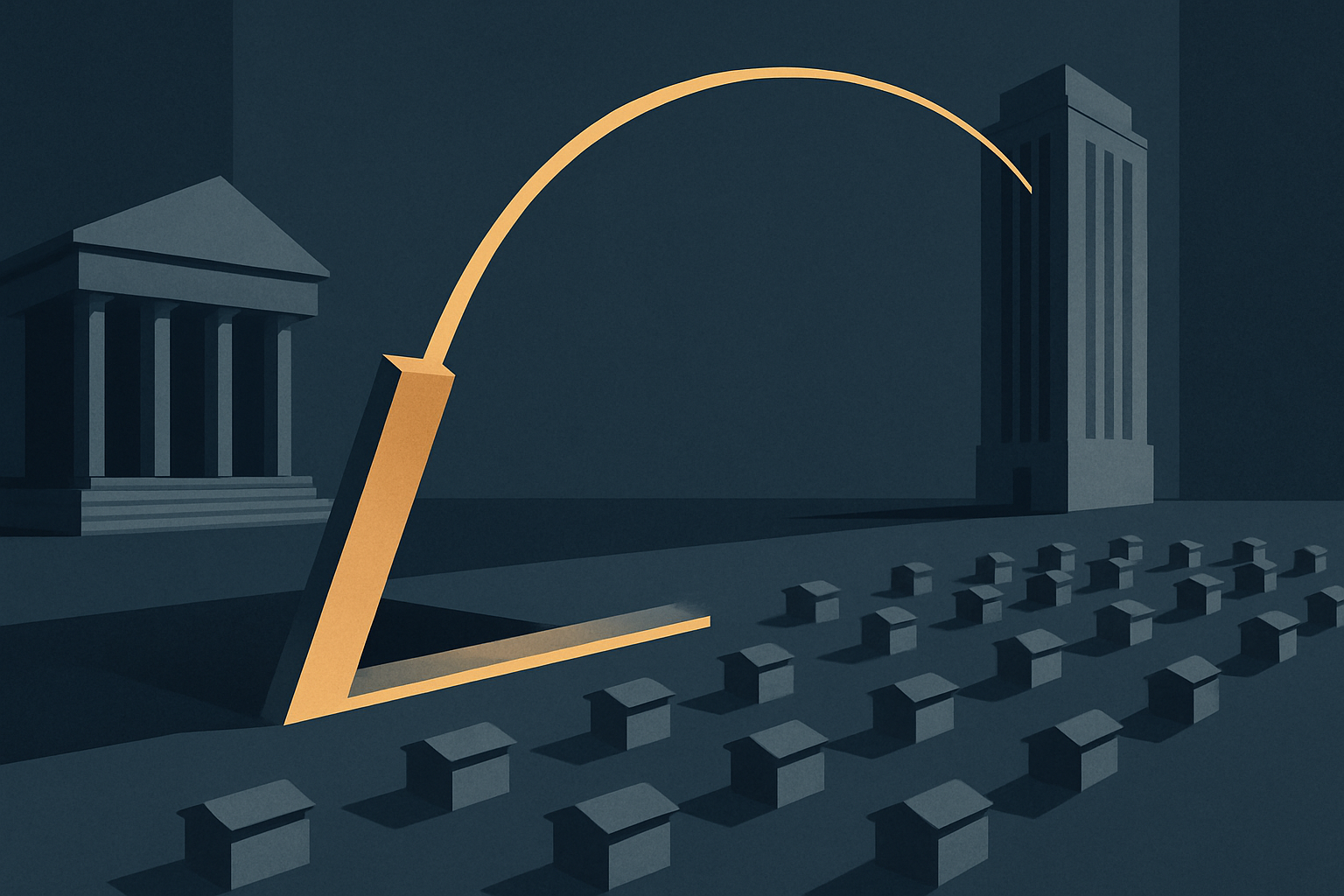
Two things happened in Manila this month that point in opposite directions. On 1 August the Securities and Exchange Commission reopened the door to new online lending platforms, ending a freeze that had held since late 2021. At almost the same time, the same regulator was telling Congress it no longer wants to run the sector at all.
The freeze is the older story. In November 2021 the SEC stopped registering new online lending platforms, after a wave of apps built on triple-digit effective rates, contact-list scraping and debt-collection tactics that amounted to public shaming of borrowers. The moratorium was a blunt instrument: stop the inflow while the rules caught up. It stayed in place for close to five years.
On 7 July the SEC issued Memorandum Circular No. 20, and on 1 August it took effect, lifting the freeze and replacing it with a framework (fintechnews.ph). MC 20 covers every financing and lending company that reaches borrowers through an app or a web platform. It leans on the levers the moratorium could not: mandatory cost disclosure, responsible-lending conduct rules, and a standing power for the SEC to refuse, suspend or delist any platform that breaks them. Reopening is not amnesty. SEC Chairperson Francis Lim was explicit that the Commission “will not tolerate the proliferation of predatory and unfair lending practices,” and that clearing the moratorium does not mean automatic approval (Philstar).
The regulator that reopened the market wants to leave it
Here is the tension. The SEC spent close to five years as the sole gatekeeper of online consumer credit, then wrote a framework to police the reopened market, and is now proposing to give that job away.
In April, SEC Commissioner Rogelio Quevedo submitted a position paper to Congress arguing that oversight of financing and lending companies should move entirely to the Bangko Sentral ng Pilipinas, the central bank (Philstar). His reasoning was less about elegance than exhaustion. Financing and lending firms, he said, are “one of the serious headaches of the SEC,” and because their business is credit, they belong with the credit regulator (Inquirer).
That is a jurisdictional argument with real history behind it. Financing and lending companies sit under two special laws, the Financing Company Act of 1998 and the Lending Company Regulation Act of 2007, both of which name the SEC as regulator. The SEC is, at heart, a securities and corporate-registration body. Chasing predatory apps, tracing fraud and refereeing debt-collection abuse is consumer-protection work that does not fit its core competence. The BSP, which already supervises banks and the conduct of financial consumers, is a more natural home.
A position paper, not a handover
The important caveat: none of the transfer is law yet. Quevedo’s paper is a proposal to Congress, not a settled decision, and the two laws that anchor SEC authority would have to be amended or worked around before anything moves. The BSP has said the shift could happen either through legislation or through administrative circulars under existing rules, and its technical working group is still deciding which route is even possible (Inquirer). Legislators and the BSP have also floated a joint model rather than a clean handoff, which would blur, not settle, the question of who is in charge.
What is not hypothetical is where the BSP would start. On 3 August the central bank said that once it holds oversight, its first act will be rules against predatory lending and abusive debt-collection practices, and that its working group is already reading through the existing statutes on collection conduct (BusinessWorld). So the sequence is unusual. The receiving regulator has named its enforcement priority before it has been handed the keys.
Why the sector wants the swap
The tell is that the industry is not fighting the transfer. Fintech firms have publicly backed moving oversight to the BSP (Inquirer). Regulated lenders generally prefer a single, predictable supervisor to a fragmented one, and a central bank that also runs the payment rails and the credit-information plumbing can offer a cleaner path to scale than a securities commission bolting consumer-credit duties onto its remit.
That preference explains the timing rather than contradicting it. Reopening registration only matters to a serious operator if the rules of the road are going to be stable. The moratorium was, in effect, an admission that the SEC could not police the market fast enough. Handing the sector to the BSP is the structural version of the same admission, aimed at the next five years rather than the last.
What to watch
For now the operative fact is MC 20. From 1 August, new platforms can register again, but only inside a disclosure-and-conduct cage the SEC can slam shut. That is the regime that actually governs Philippine online lending today, and it is the SEC, not the BSP, enforcing it.
The transfer is the direction of travel, not the current map. The signals to track are concrete: whether the BSP’s working group concludes it can act by circular or needs Congress to amend the 1998 and 2007 laws; whether the final design is a full handover or the joint model legislators have floated; and how fast the reopened registration window fills, since a rush of new applicants under SEC rules that may migrate to BSP rules within a year or two is its own kind of regulatory limbo. Manila has decided to let online lenders back in and to change who watches them, and it is doing both at once. The borrowers the whole exercise is meant to protect are waiting to see which regulator, under which law, actually shows up.


Discussion
Sign in to join the discussion.
No comments yet. Be the first to share your thoughts.