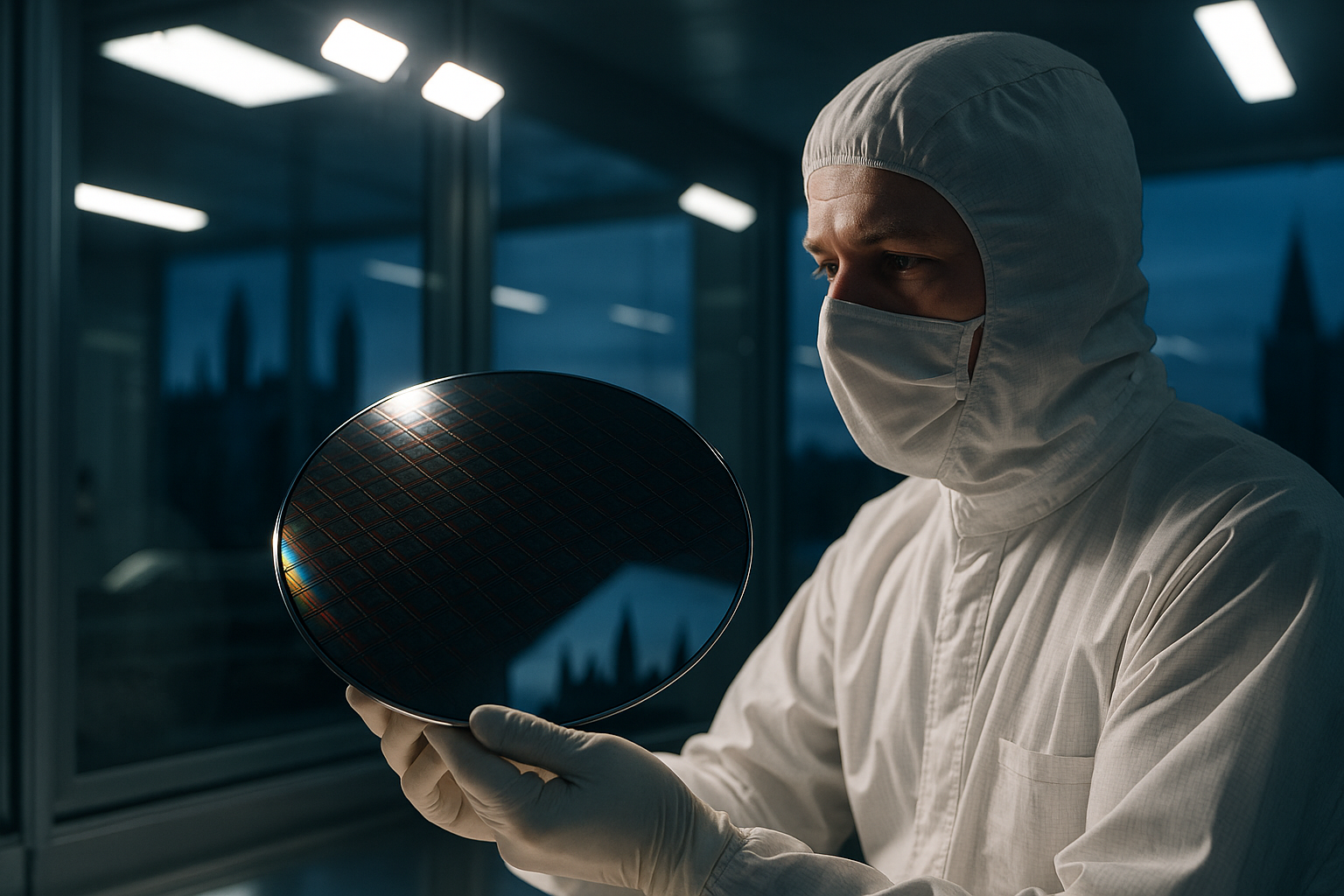
Arm Holdings reports Q4 FY26 results in the first week of May, closing a fiscal year in which the Cambridge-headquartered chip designer has bet its premium on two narratives: a structural step-up in royalty rates as Armv9 displaces older instruction sets, and rapid commercial uptake of its Compute Subsystem (CSS) pre-integrated IP bundles inside hyperscaler silicon. With consensus already pricing in mid-teens royalty growth for the quarter, the bar is high — and the questions get pointed.
Compute Subsystems and the hyperscaler arms race
The CSS programme, launched in 2023 and now in its third generation, lets cloud customers shorten the time from licence to tape-out by buying pre-validated cluster designs. It also lets Arm charge materially more per chip than a bare instruction-set licence. AWS’s Graviton 4, Microsoft’s Cobalt 100 and Google’s Axion are all built on Arm architecture; what investors want from the print is fresh evidence that CSS attach rates inside those families are moving from pilot to volume. Sell-side analysts including Bernstein have flagged that CSS-related revenue could reach a high single-digit share of total royalty revenue by FY27 if hyperscaler deployment continues at the 2025 pace. London-based City analysts are more cautious, but the directional bet is the same: Arm wants to be paid like a system designer, not a library.
Armv9 mix and the smartphone royalty equation
The premium handset cycle remains Arm’s cash cow, and the company has guided that Armv9 — which roughly doubles its royalty rate versus Armv8 — now sits in well above half of mobile shipments by value. The Q4 print should clarify whether that mix shift is decelerating as Armv9 saturates flagships, or whether mid-tier penetration is still pulling the blended rate up. Apple’s A19 and Qualcomm’s Snapdragon 8 Gen 5 cycle are the obvious swing factors at the top end. The cleanest read on whether Arm’s pricing power extends beyond the flagship tier sits in MediaTek’s mid-range Dimensity line, where Armv9 SKUs are now standard.
China and the Alibaba question
Arm China — the operationally independent joint venture in Shenzhen — generates roughly a fifth of group royalties and remains the company’s most exposed line. Beijing’s ongoing push to certify domestic alternatives via Loongson and Alibaba’s T-Head silicon adds pressure that no instruction-set licence can fully insulate against. Investors will scrutinise any commentary on Alibaba’s contribution and on the pace at which Chinese hyperscalers are spinning up in-house RISC-V cores. Chief executive Rene Haas has been measured on the topic; the print and the conference call may force more specificity than the last quarter delivered.
What a clean quarter would look like
A constructive read on the night would combine royalty growth in the high teens, explicit CSS attach disclosure, an FY27 guide that bakes in continued mix uplift, and stable language on China. Anything weaker and the stock — which trades at a multiple that already prices in near-flawless execution — has further to fall than its sector. Cambridge’s biggest tech export has earned its valuation by becoming the toll booth on the AI compute road. Q4 will tell investors whether the toll is still rising.
Sources: Arm Q3 FY26 earnings commentary; Bernstein semiconductor research; Reuters and the Financial Times on hyperscaler custom-silicon roadmaps; supply-chain commentary on MediaTek and Qualcomm shipments.


Discussion
Sign in to join the discussion.
No comments yet. Be the first to share your thoughts.