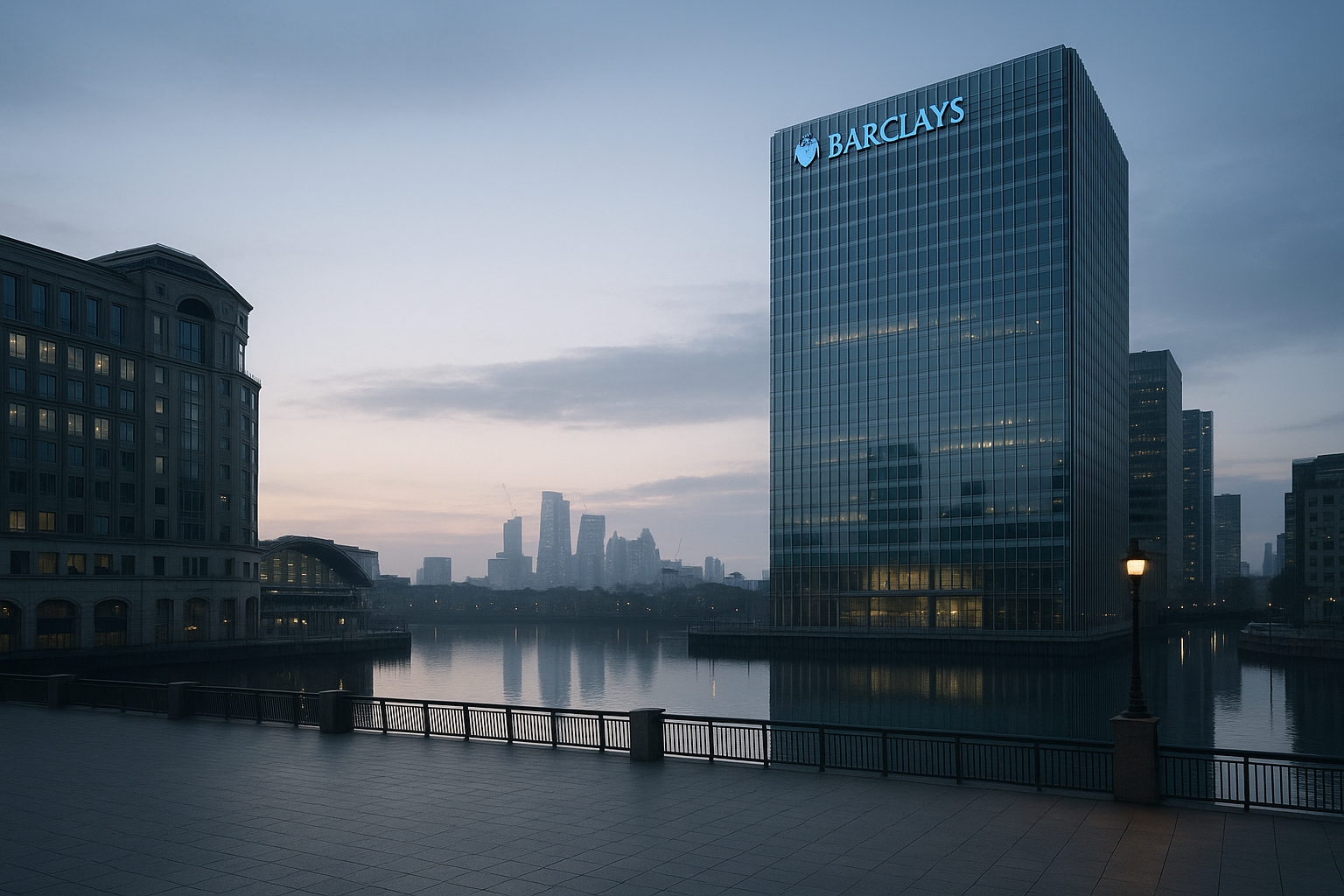
Barclays reports first-quarter numbers on Thursday morning, a print that closes out the trio of FTSE 100 lender previews the City has been running through this week alongside HSBC and Lloyds. For chief executive C.S. Venkatakrishnan, who launched a three-year strategic refresh in February 2024 with a headline £10bn capital return pledge by full-year 2026, this quarter is the first hard test of whether the closing instalment of that promise still lands on plan.
The setup is unusual. Unlike the domestic-focused Lloyds franchise or the Asia-tilted HSBC engine, Barclays has spent the past eighteen months recalibrating its investment bank around financing and securitised products at the expense of equities and advisory league-table chasing. Analysts at Berenberg and Citi flagged in pre-Q1 notes that the City will read this morning’s numbers primarily through that mix-shift lens.
Investment bank back in focus
Barclays’ corporate and investment bank produced just over £3bn in first-quarter income across 2025, and consensus compiled by the company’s own analyst poll heading into Thursday clusters around a print of c.£3.2-3.4bn for Q1 2026 — supported by what JPMorgan and Morgan Stanley have already trailed as a strong opening quarter for FICC trading volumes. For Venkat that band matters disproportionately: his February 2024 plan committed Barclays to an investment-bank return on tangible equity in the high single digits as a structural floor, and the City wants visible delivery before the next strategy update lands.
Equity capital markets and advisory remain the question mark. London’s IPO drought has eased only marginally in early 2026, and Barclays’ share of European M&A advisory has trended sideways through the past two quarters according to Dealogic data circulated to clients in mid-April. Expect the management Q&A to lean heavily on whether financing strength can compensate for a softer banking fee line.
UK retail and Tesco Bank integration
The domestic side carries its own scrutiny. The Tesco Bank acquisition completed in November 2024 has been rolled into Barclays UK, and the group has guided to roughly £400m of cost synergies and revenue uplift by 2027. Q1 is the first reporting period in which the integration is fully bedded into reported numbers without prior-year restatements distorting the picture, which the Sunday Times flagged at the weekend as the cleanest read of underlying franchise economics in eighteen months.
Net interest income for Barclays UK is the other line analysts will pull straight to the front. The group’s structural hedge has been re-rolling at meaningfully higher yields through 2025, and Bank of America’s UK banks team estimates the Q1 NII tailwind should run to the high single-digit percentage points year on year — a number that would, if delivered, give Venkat clear room to reaffirm full-year guidance without trimming the £10bn distribution math.
What success looks like
A clean Q1 print for Barclays this morning needs three things to land at once: an investment bank income number inside the £3.2-3.4bn corridor with FICC carrying the weight; UK NII momentum sufficient to sustain full-year guidance; and a reaffirmed capital-return runway that keeps the £10bn cumulative figure intact. Anything that nicks one of those, particularly the distribution math, becomes the City’s headline regardless of what the management narrative tries to do with it.
For Venkat, a strategy that has spent two years being pitched as boring-on-purpose is about to have its loudest quarter. The market has already priced in delivery. Thursday is when Barclays starts paying for it.


Discussion
Sign in to join the discussion.
No comments yet. Be the first to share your thoughts.