Meta's Llama 4 Is Winning the Enterprise AI War Nobody Expected
Meta's open-source Llama 4 family has quietly become the default AI backbone for thousands of enterprises — and it's forcing a fundamental rethink of how companies pay for intelligence.
Model releases, frontier-lab strategy, AI policy and the economics of machine intelligence.
Meta's open-source Llama 4 family has quietly become the default AI backbone for thousands of enterprises — and it's forcing a fundamental rethink of how companies pay for intelligence.
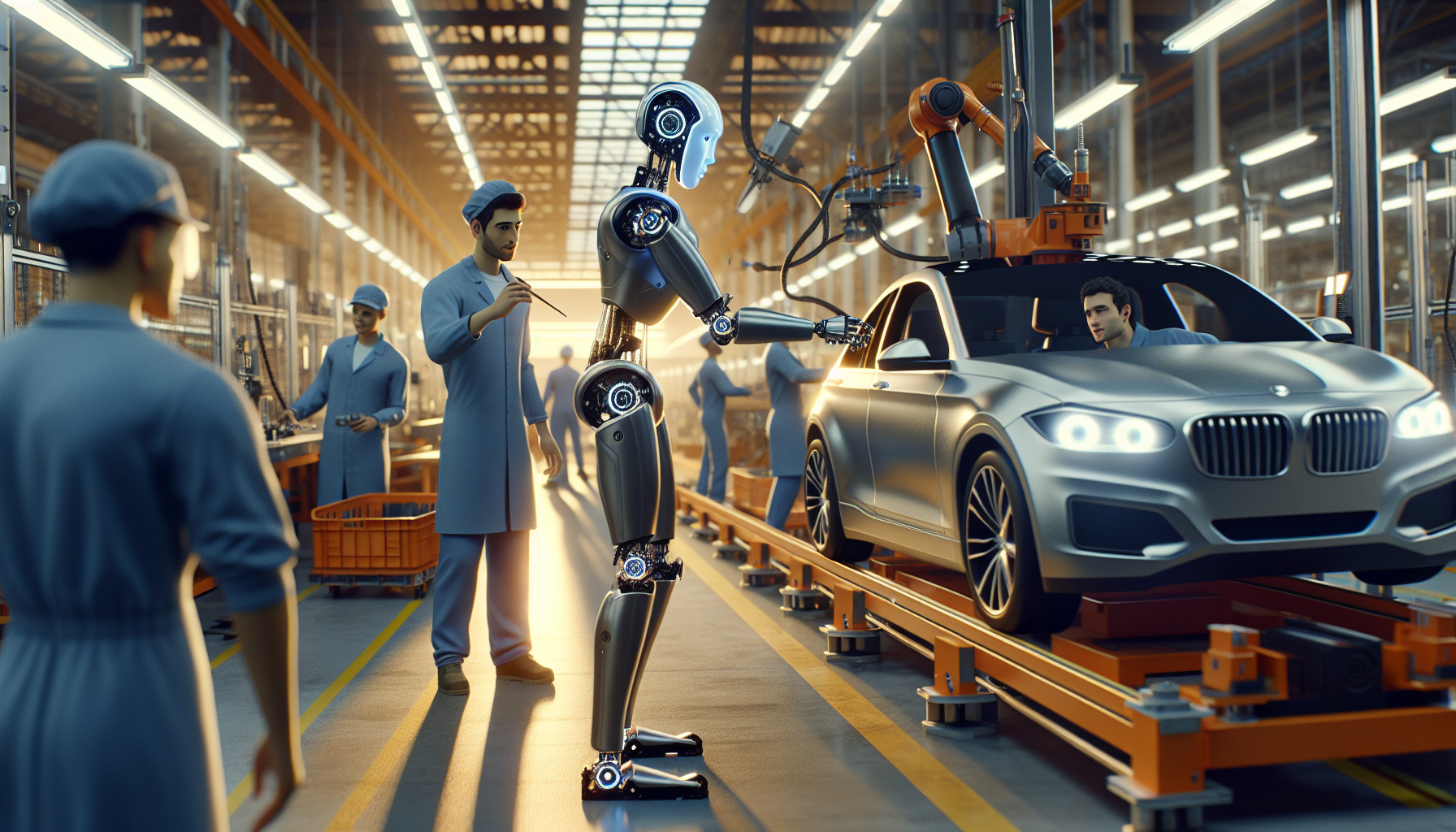
After years of viral demos, humanoid robots from Figure AI, Tesla, and 1X Technologies are finally performing real work in real factories — and the economics are starting to make sense.
AI model training and inference workloads are pushing U.S. electrical grids to their limits, forcing utilities, hyperscalers, and policymakers into an unprecedented scramble for power.
Autonomous AI agents are beginning to absorb workflows that enterprise SaaS platforms built their business models on, forcing incumbents to adapt or cede ground.
Microsoft is deploying a new generation of autonomous Copilot agents capable of executing multi-step business workflows without human prompting — and enterprises are signing on at scale.
OpenAI's latest reasoning models score above 90% on elite math benchmarks and run complex coding tasks autonomously — marking a step-change from prior generations.
JPMorgan, Goldman Sachs, and Morgan Stanley are deploying AI agents that can execute multi-step financial workflows autonomously — and the numbers are beginning to show up in earnings.
China's DeepSeek releases R2, its most capable model yet, matching frontier US benchmarks at a fraction of the cost — and triggering fresh scrutiny of AI export controls.
With key EU AI Act compliance deadlines hitting in 2026, enterprises face up to €35 million in fines — and most aren't ready.
While OpenAI battles internal restructuring and Google chases benchmark headlines, Anthropic's Claude 4 family is making serious inroads inside Fortune 500 boardrooms.
With WWDC weeks away, Apple is reportedly doubling down on private, on-device intelligence — a strategy that diverges sharply from cloud-first rivals but speaks directly to a growing segment of enterprise buyers.
Google's Gemini 2.5 Pro has pulled ahead on major coding and reasoning benchmarks, triggering a wave of enterprise migrations away from competing models.
OpenAI has enabled cost-per-click advertising inside ChatGPT, setting bids between $3 and $5 per click and putting itself squarely in competition with Google and Meta for performance marketing budgets.
The EU AI Act's first major compliance deadlines are now in force. With fines up to €35 million or 7% of global turnover, the stakes for non-compliant AI deployments have never been higher.
Anthropic's Agent SDK and Claude Sonnet 4.6 are driving a measurable shift in how Fortune 500 companies deploy autonomous AI — moving from chatbots to full agentic workflows.
Microsoft's Q3 FY2026 earnings confirm the company's AI transformation is no longer a growth story — it's the core engine of an already-massive business.
Meta's Llama 4 family — Scout, Maverick, and the incoming Behemoth — rewrites the open-source AI playbook with multimodal reasoning and single-GPU accessibility.
As GB300 NVL72 systems reach hyperscalers at scale, compute costs are beginning to fall — and the competitive dynamics of AI infrastructure are shifting with them.
A wave of billion-dollar funding rounds is transforming humanoid robotics from a science experiment into an industrial reality — but the path from demo to deployment is proving harder than the headlines suggest.
The EU's General-Purpose AI compliance deadlines are no longer theoretical — regulators are moving, and the industry's response reveals just how unprepared many providers remain.
Anthropic's annualized revenue has crossed $30 billion, overtaking OpenAI in the race for enterprise AI spending — a reversal that would have seemed impossible eighteen months ago.
Alphabet's Waymo hit 10 million paid autonomous rides this month, with operations now spanning six US cities and a commercial fleet approaching 2,500 vehicles — the clearest proof yet that robotaxis can scale.
AMD's Data Center segment delivered $5.1 billion in Q1 2026, up 57% year-over-year, as the MI350X accelerator wins enterprise deployments previously locked up by NVIDIA.
After years of promise, AI-powered drug discovery is generating clinical results and signed checks — pharma's most expensive problem may be getting a credible solution.