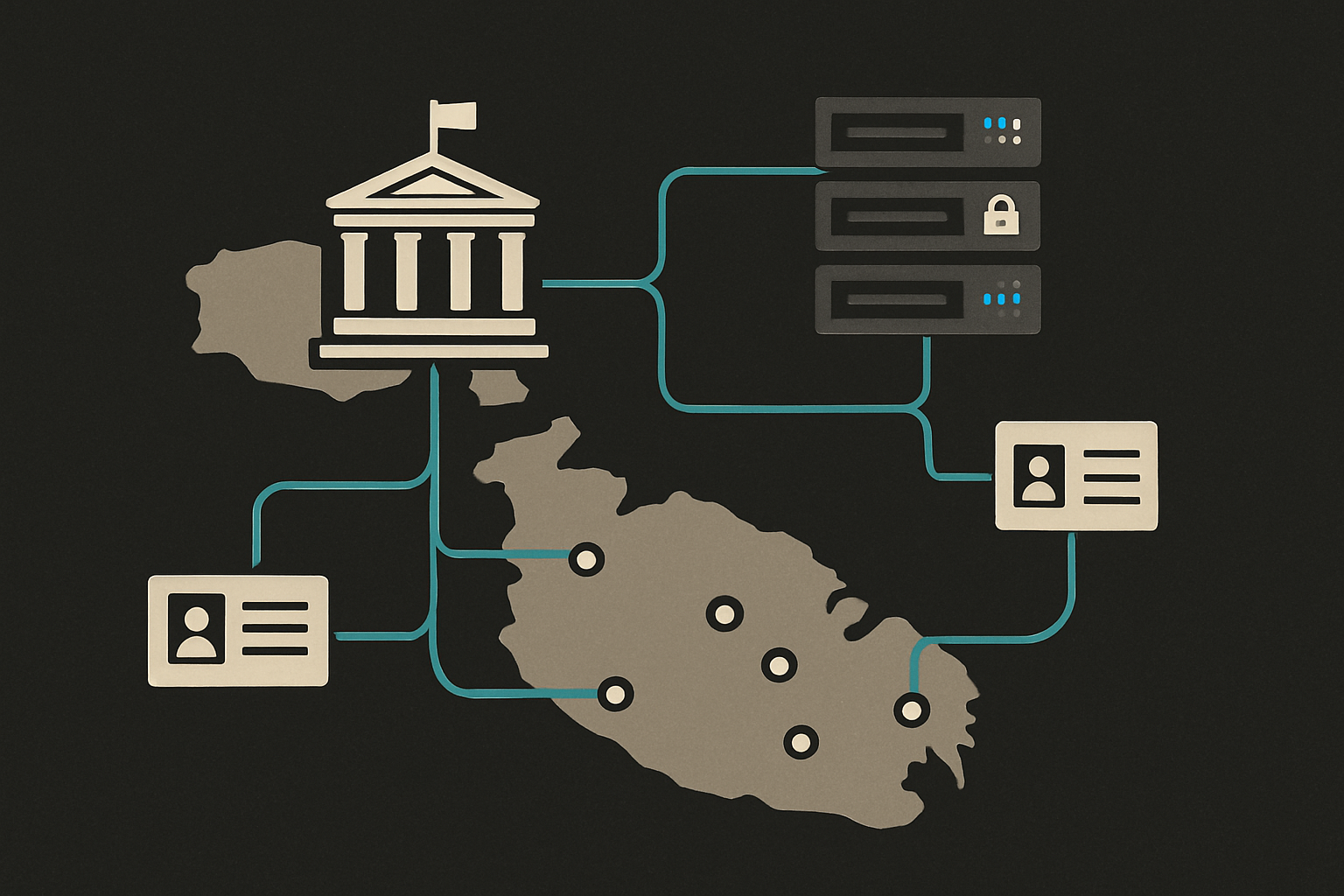
Malta Is Turning ChatGPT Plus Into Public AI Infrastructure
Malta's OpenAI deal is small in population terms, but it tests a bigger distribution model: subsidized consumer AI access tied to national literacy, not ordinary software procurement.
Every story in this edition, newest first.
Malta's OpenAI deal is small in population terms, but it tests a bigger distribution model: subsidized consumer AI access tied to national literacy, not ordinary software procurement.
EU and UK regulators are turning critical third-party oversight into the control layer for cloud, payment, custody and tokenised-market infrastructure before AI law settles.
The FCA and Bank of England are no longer treating wholesale tokenisation as a demo problem; the hard test is whether settlement hours, collateral rules and market infrastructure move with it.
The next phase of China AI policy is less about ethics language than the operational gates that decide which agents can ship, where they run, and who carries the failure risk.
British regulators are pairing frontier-AI cyber expectations with supervised rails for agentic payments, AML and customer tools.
The EU's AI energy consultation is really about building the accounting layer for models, inference and data centres before politics turns electricity into the constraint.
Beijing's new agent guidelines treat autonomy, identity, tooling and safety controls as infrastructure questions, not chatbot features.
The new U.S. policy line is that failing to deploy AI in finance can be a stability risk, not just a governance shortcut.
Banxico's SPEI proposal treats mobile-transfer usability as financial infrastructure, not app decoration.
ADGM's USD4.4 trillion AUM headline is not only a brag; it shows the Gulf trying to become an operating base for global capital, not just its source.
RBI's fraud paper does not attack UPI's success; it asks whether a payment rail built around speed now needs controlled friction for high-risk transfers.
AI-enhanced imaging does not make every selfie a bank breach, but it makes one thing clear: biometric credentials cannot be treated like secrets you can rotate.
The Malta deal is less about one free subscription than a new distribution model: governments subsidising AI access, literacy and vendor adoption in the same package.
The useful comparison is no longer a static leaderboard. It is a dated, sourced view of which model is defensible for a specific job today.
ESMA's survey shows AI adoption in securities markets is not spreading evenly; it is giving larger firms a cheaper, earlier path to automation while smaller firms wait.
Redata would make Brazil cheaper for AI infrastructure, but the policy only works if transmission planning turns a 26.2 GW connection queue into usable power.
The SFC's secondary-trading framework tests whether tokenised funds can become regulated product plumbing, not just a new wrapper for old portfolios.
DORA is turning critical technology vendors into supervised financial infrastructure without pretending they are banks.
The FSC is legalizing distributed-ledger securities, but the design still points toward regulated issuers, KSD account controls, OTC brokers, and ordinary investor-protection machinery.
A new critical-infrastructure request treats high-performance AI as a vulnerability-discovery shock, not another chatbot compliance problem.
The UAE’s new tourist account is not just a travel convenience; it turns border-verified identity into a reusable banking rail for non-residents.
The National Participation Growth Fund gives households a state-cushioned route into strategic industries, but the risk transfer is more precise than the sales pitch.
A new technology-sector guide gives banks a sharper checklist for climate lending, but it also pushes more judgment into underwriting.
The constraint in AI infrastructure is moving from buying GPUs to proving that a project can get energized, fund grid upgrades, and operate without becoming somebody else's reliability problem.