ESMA Can Delay Enforcement. It Cannot Extend Article 69.
Europe wants third-country depositories to keep serving EU issuers after 17 January, but its continuity bridge is supervisory forbearance while the legal amendment remains unfinished.
Markets, banking, fintech regulation, capital allocation and the financial impact of technology.
Europe wants third-country depositories to keep serving EU issuers after 17 January, but its continuity bridge is supervisory forbearance while the legal amendment remains unfinished.
The estimate flags concentrated cross-exposure, but it does not match trade ties to deal dates or isolate the money supplied by linked investors.
NXT's after-market value fell 39.5% after KRX entered evening trading, while total volume share rebounded above its pre-launch average in the final five sessions, a split the public data cannot attribute to routing.
The IPO filing puts 25,000 of 461,000 active-plus-contracted GPUs in service while customer prepayments, delivery conditions and convertible financing carry much of the remaining build.
Purchase-linked warrants align years of custom engineering, but they also transfer part of the supplier upside to the customers creating the demand.
The first tranche moves about 220 million dollars, and the settlement risk that unlocked the upgrade sits on Vietnamese securities firms until a central counterparty arrives.
On 1 June Nigeria became Africa's first T+1 market, three years ahead of Europe's 2027 switch, but the constraint that actually gates foreign portfolio flows is dollar liquidity at repatriation, and a faster settlement cycle does nothing to widen it.
Washington shortened its settlement cycle in May 2024 and left Europe a day behind on the same cross-border trades. Closing that seam took a coordinated 2027 big-bang, and the interim has a real price.
Section 232 taxes semi-finished copper at 50% and derivatives at 25%, but leaves refined cathode untouched, even as a year of tariff front-running has buried COMEX warehouses in the one form of the metal the duty never hits.
Property-catastrophe rates fell 16% across 2026's renewals as reinsurance capital hit a record $790bn: a capital-supply cycle, not a quiet-weather one, and the Atlantic hurricane season is about to test it.
A record share of reserve managers plan to add gold — and a growing minority are quietly pulling it out of London and into domestic vaults. Custody has become a sovereignty question.
AI infrastructure used to be financed out of cash flow; in 2026 it runs on record bond issuance and off-balance-sheet private credit — which changes what an AI slowdown would break.
SK Hynix just passed Samsung as Korea's most valuable company. The bigger story is that two memory makers are now more than half the KOSPI — and the index is now long one AI-memory cycle whether holders chose it or not.
Goldman and peers expect nontraditional lenders and real-estate capital to fund more of the AI buildout as hyperscaler balance sheets hit concentration limits.
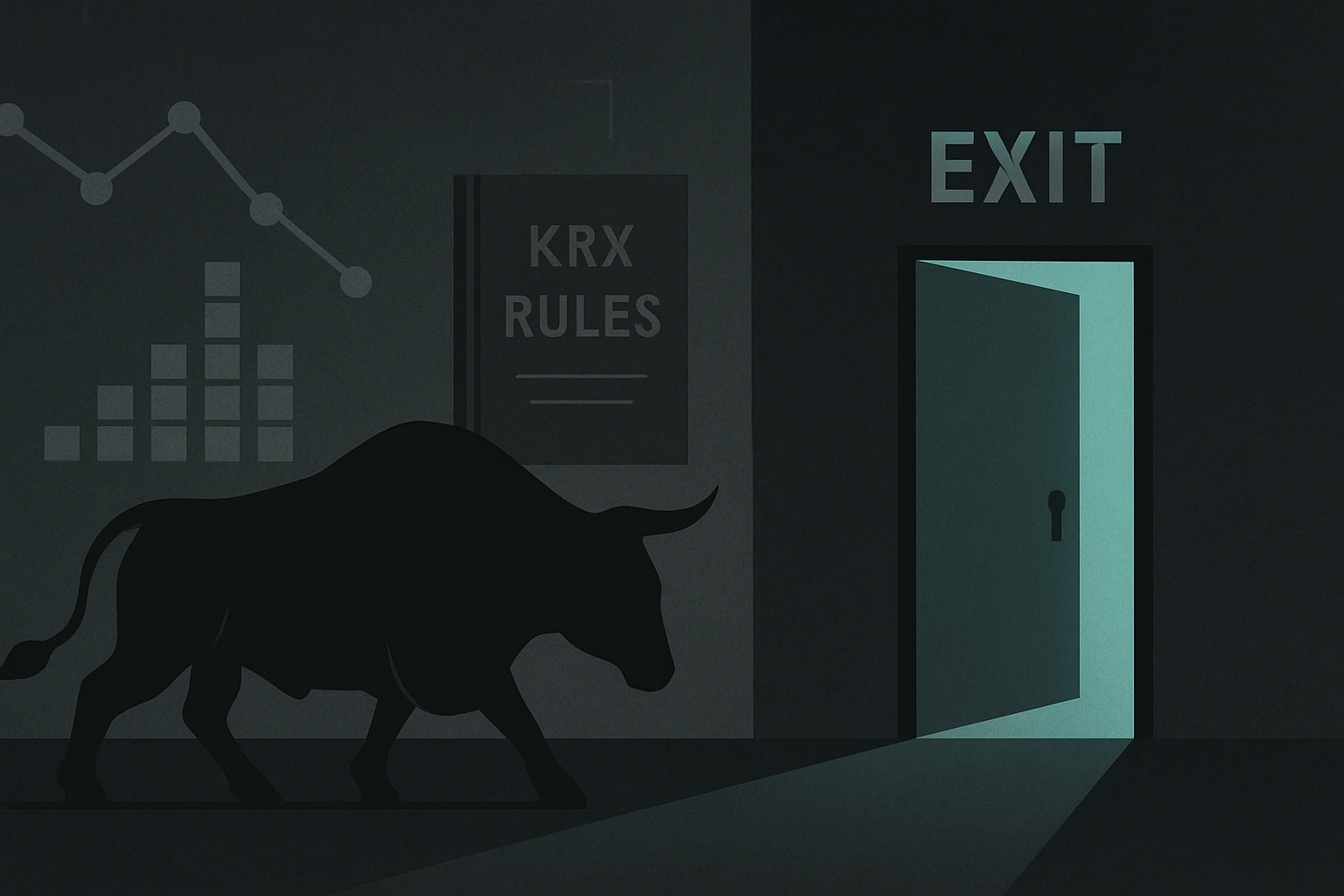
Seoul's KRX rule changes are a capital-market reform with teeth: higher delisting thresholds, anti-pump mechanics and faster removal of companies that should not be renting a public listing.
India's market-continuity story is shifting from a rarely used investor fallback portal to exchange-run contingency access, centralized cyber monitoring, and AI-risk playbooks.
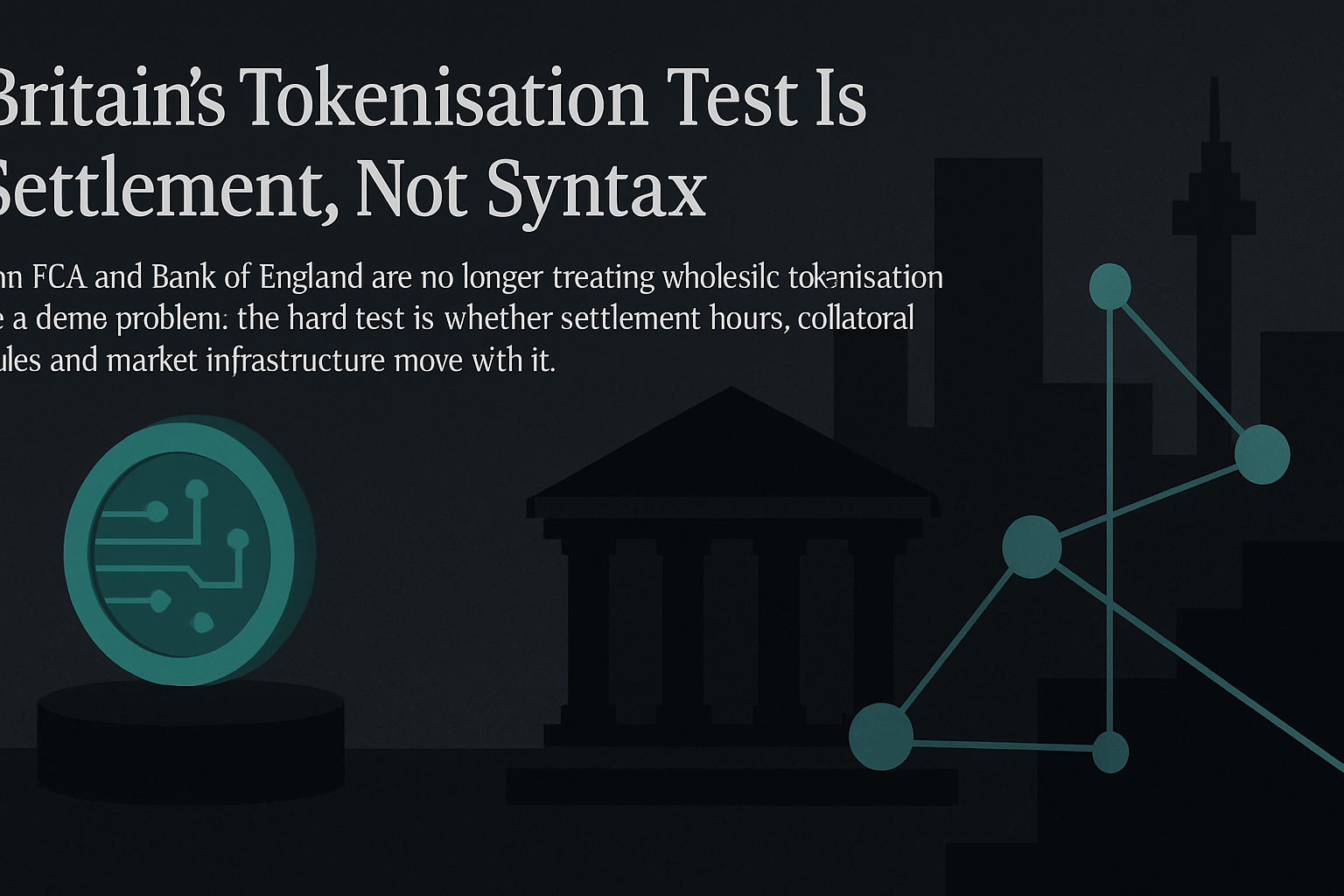
The FCA and Bank of England are no longer treating wholesale tokenisation as a demo problem; the hard test is whether settlement hours, collateral rules and market infrastructure move with it.
ADGM's USD4.4 trillion AUM headline is not only a brag; it shows the Gulf trying to become an operating base for global capital, not just its source.
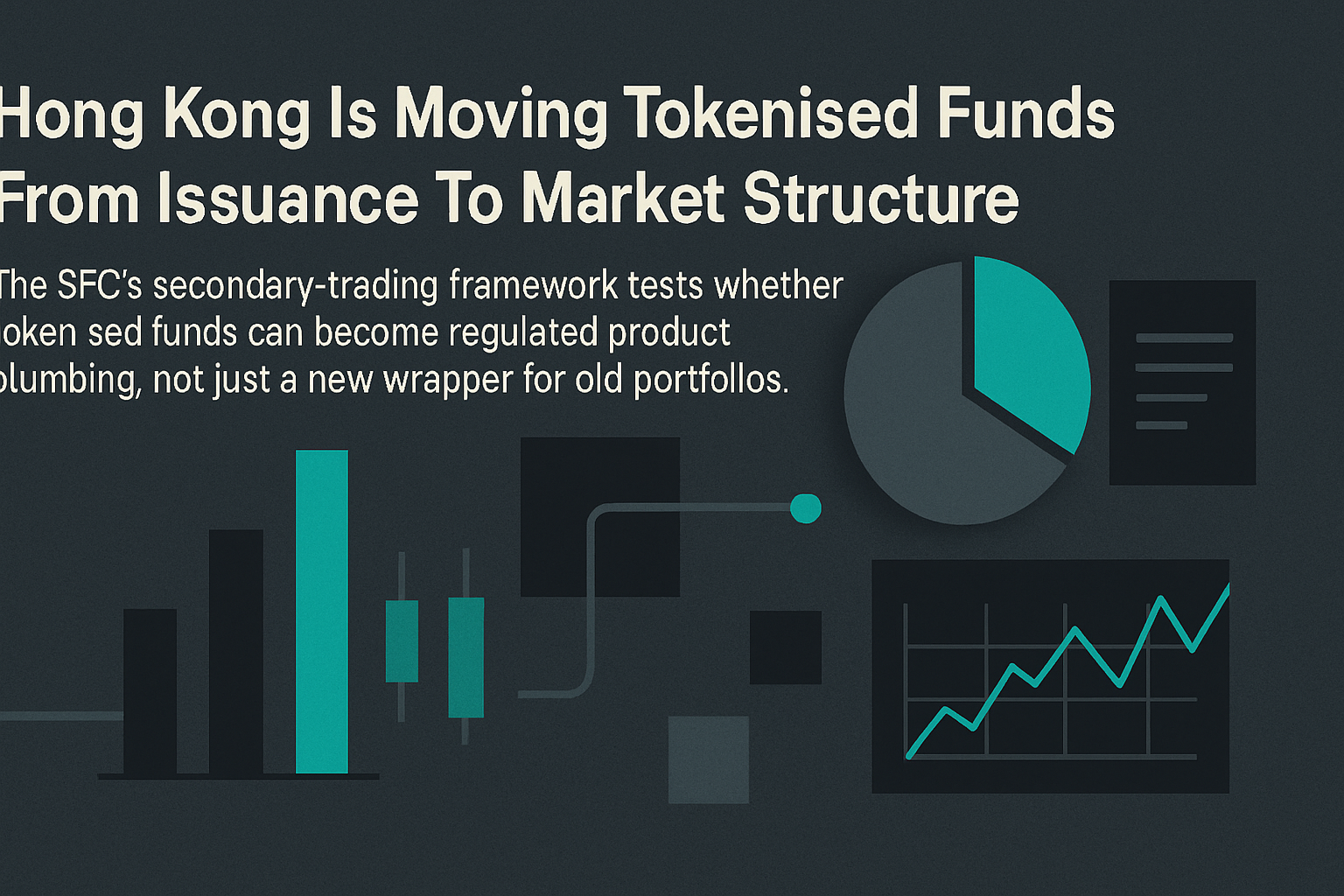
The SFC's secondary-trading framework tests whether tokenised funds can become regulated product plumbing, not just a new wrapper for old portfolios.
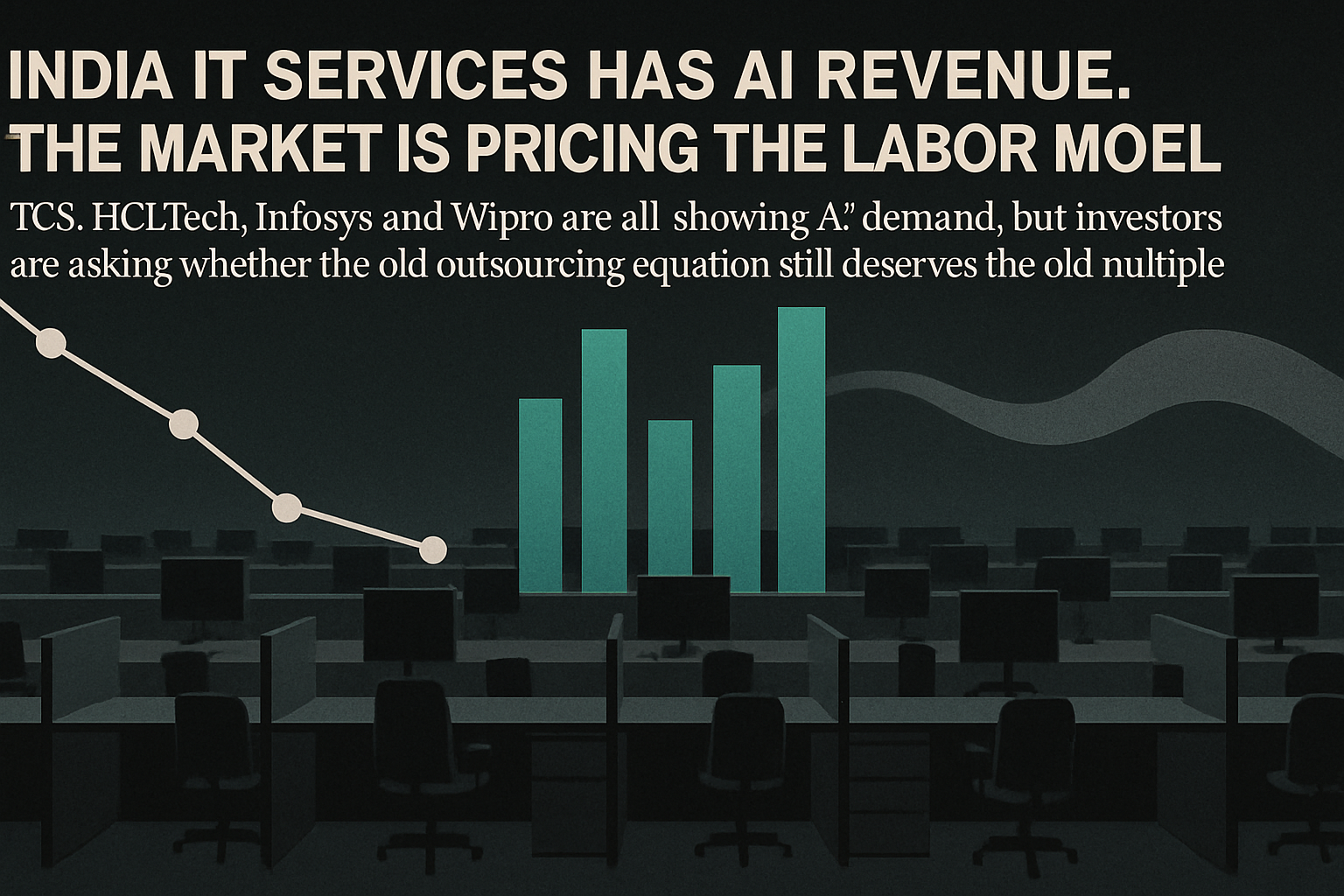
TCS, HCLTech, Infosys and Wipro are all showing AI demand, but investors are asking whether the old outsourcing equation still deserves the old multiple.
Alphabet, Amazon, and Meta alone point to roughly $517.5 billion of annual capex as the AI infrastructure cycle keeps accelerating.
CoreWeave's demand picture still looks hot, but its first quarter shows the real transition underway: GPU rental is becoming hyperscale infrastructure, with hyperscale-style capital intensity and thinner incremental economics.
Meta delivered Q1 revenue of $43.4 billion and diluted EPS of $5.95, beating Wall Street, but raised full-year capex guidance to $130-135 billion as Llama 5 infrastructure and the Andromeda ad-ranking stack absorb spend faster than ad pricing can offset.
Apple reports fiscal Q2 results Thursday after the closing bell, with consensus at $109.7B revenue and $1.95 EPS as Tim Cook prepares his September 1 handoff to John Ternus and Siri's Gemini-backed overhaul anchors the AI reset.